THE CITIZEN BLOG
THE CITIZEN BLOG
It Takes a Village
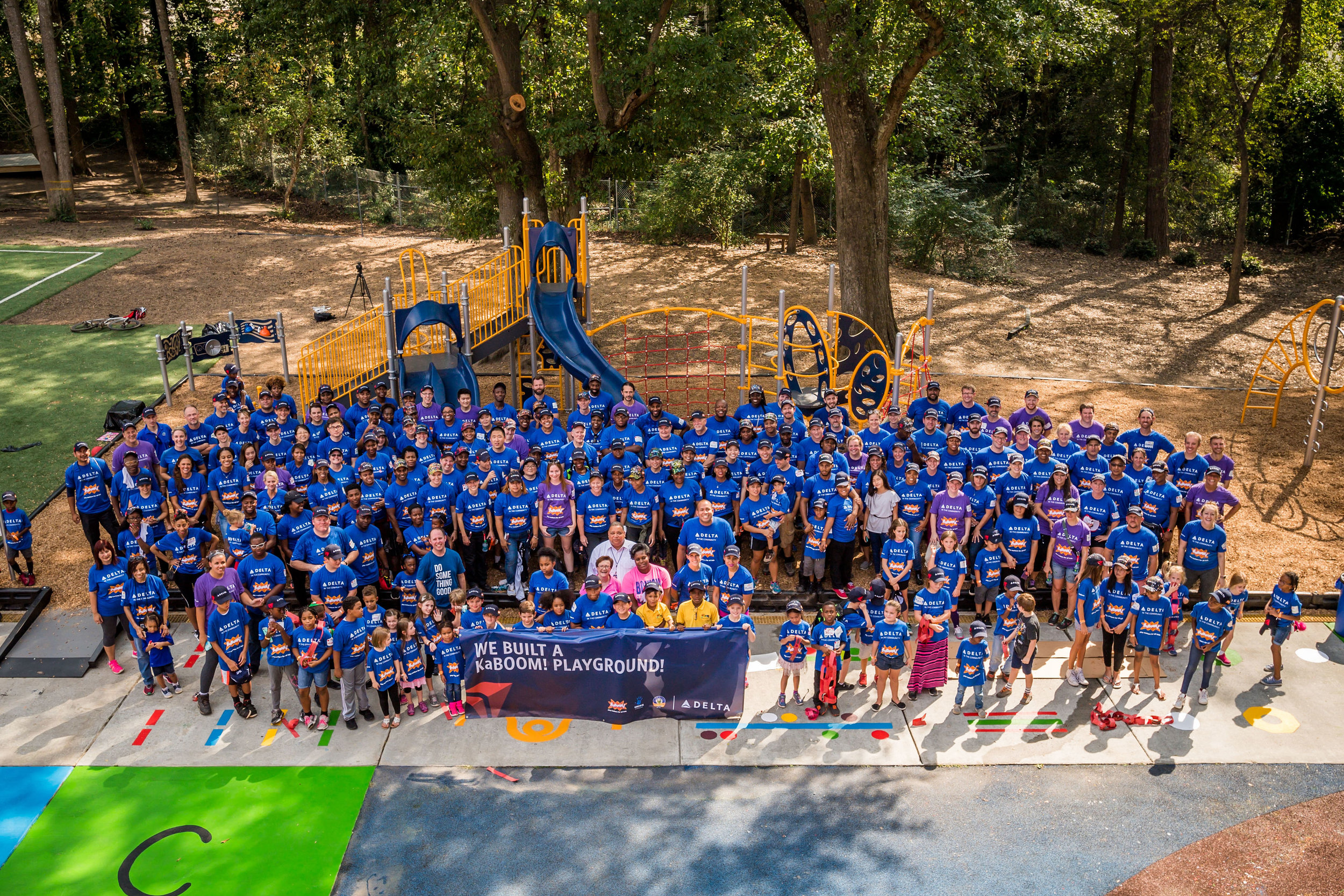
Pulling off a massive day of service isn’t easy, or for the faint of heart, and to make this past weekend’s Hands On Atlanta Day happen, we had to dig deep and rally the troops. We had 35 corporate sponsors come through (thank you, thank you, thank you and high fives) to support more than 50 projects at nonprofits and schools throughout metro Atlanta. We leaned on our title sponsor, Delta, to set the tone for the day at Bolton Academy with 150 employees and another 150 families and community members who rolled up their sleeves to build a Kaboom! playground and outdoor classroom in just 6 hours! But that’s just the start…
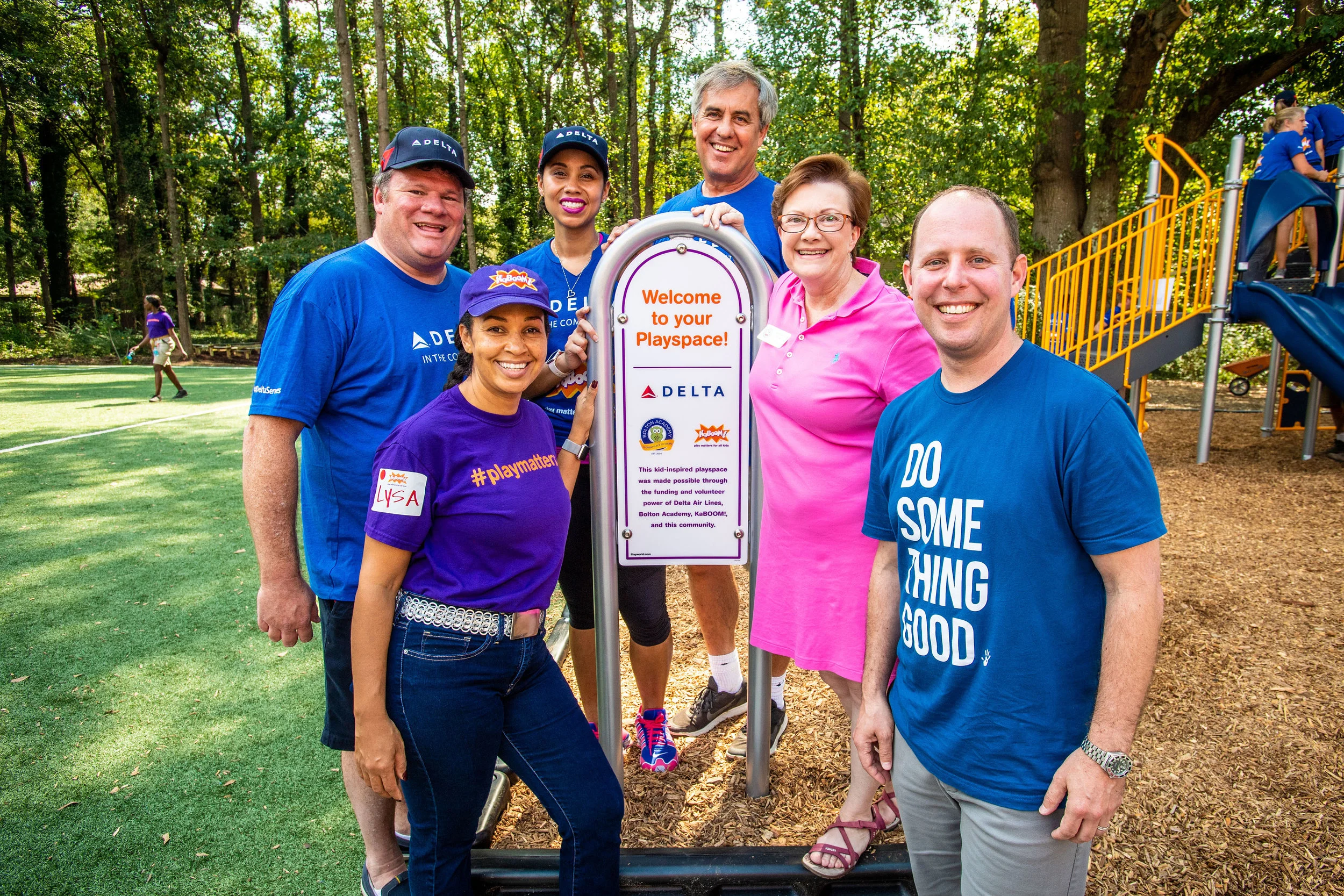
Photo by Chris Rank
Pulling off a massive day of service isn’t easy, or for the faint of heart, and to make this past weekend’s Hands On Atlanta Day happen, we had to dig deep and rally the troops. We had 35 corporate sponsors come through (thank you, thank you, thank you and high fives) to support more than 50 projects at nonprofits and schools throughout metro Atlanta. We leaned on our title sponsor, Delta Air Lines, to set the tone for the day at Bolton Academy with 150 employees and another 150 families and community members who rolled up their sleeves to build a Kaboom! playground and outdoor classroom in just 6 hours! But that’s just the start…
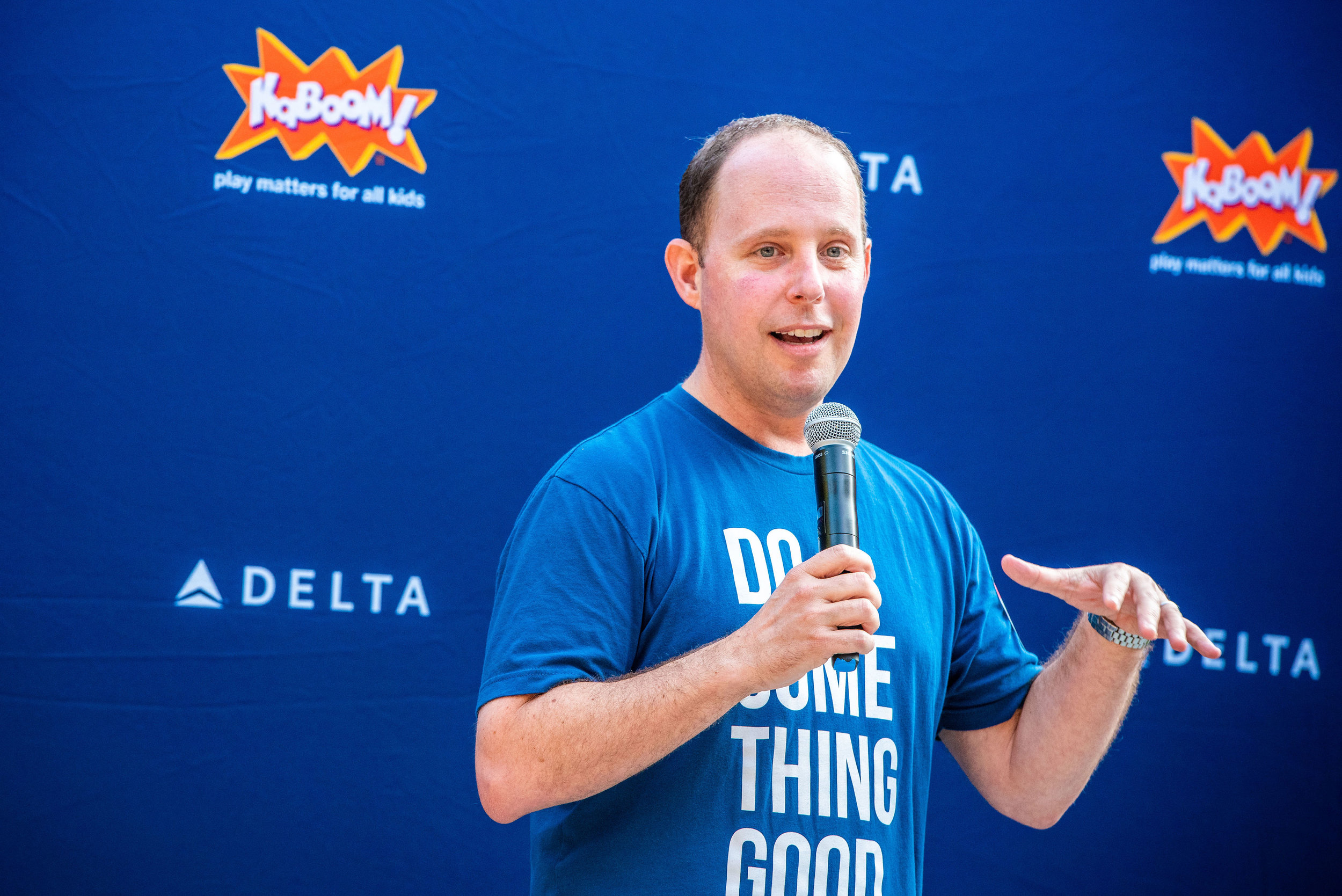
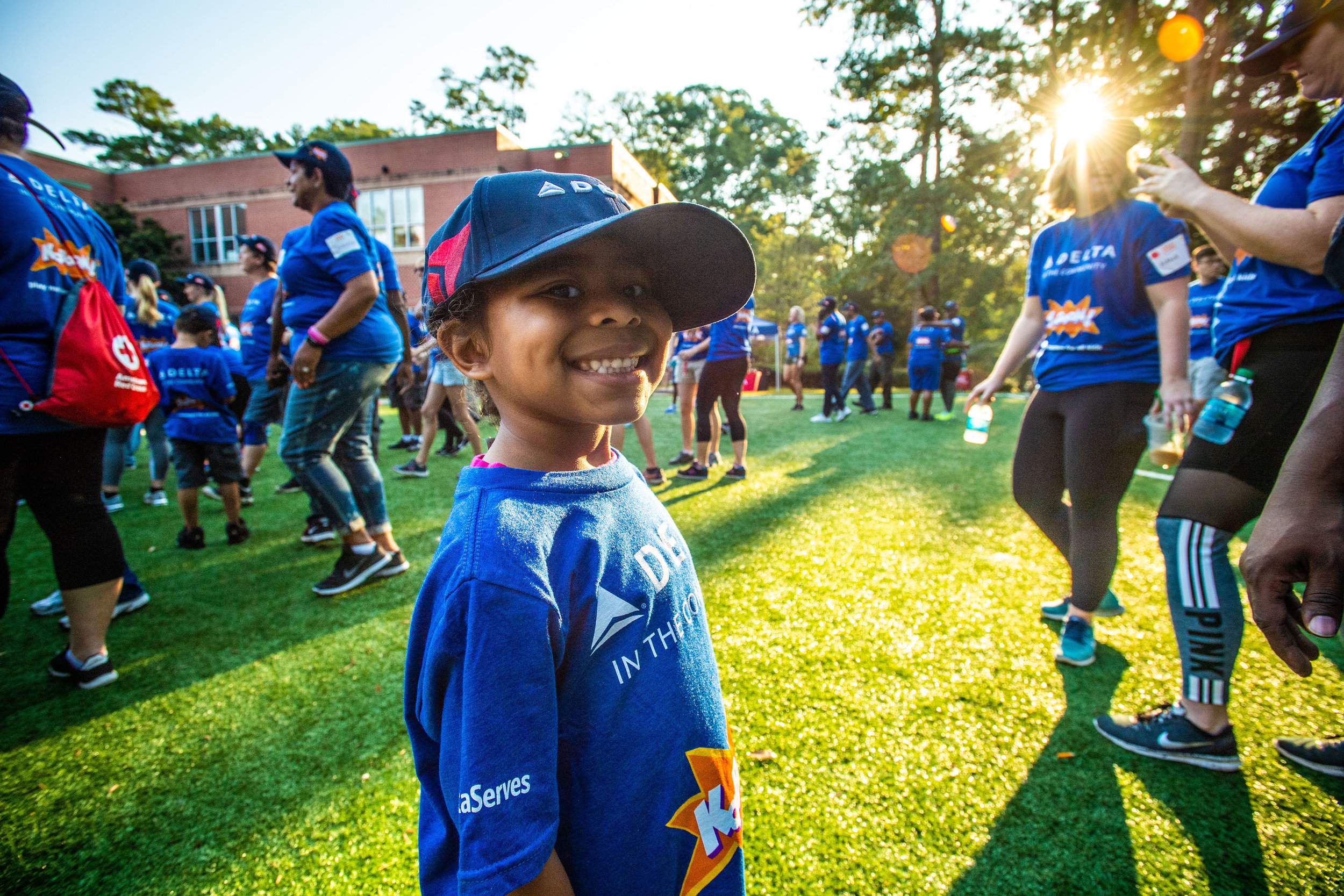
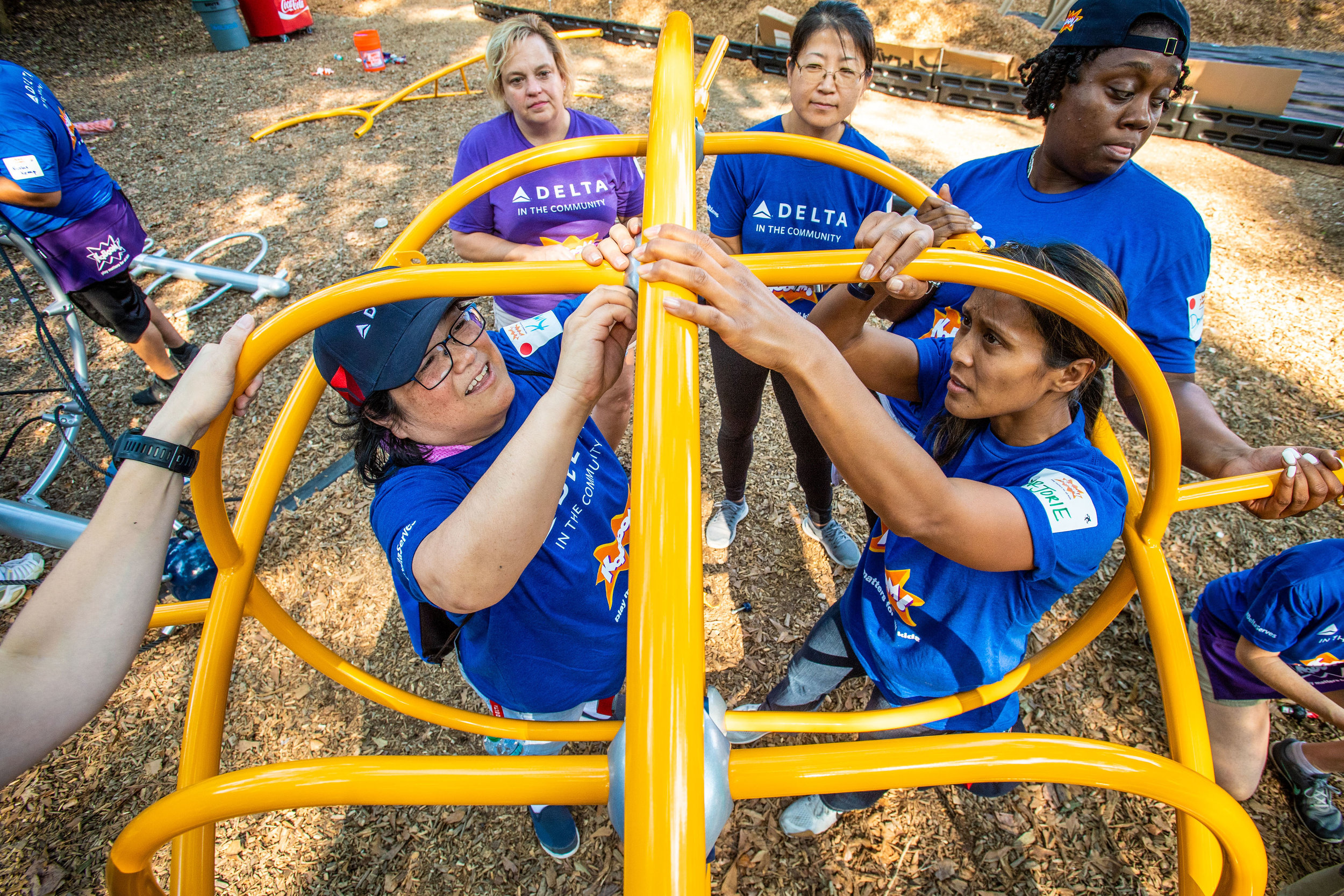
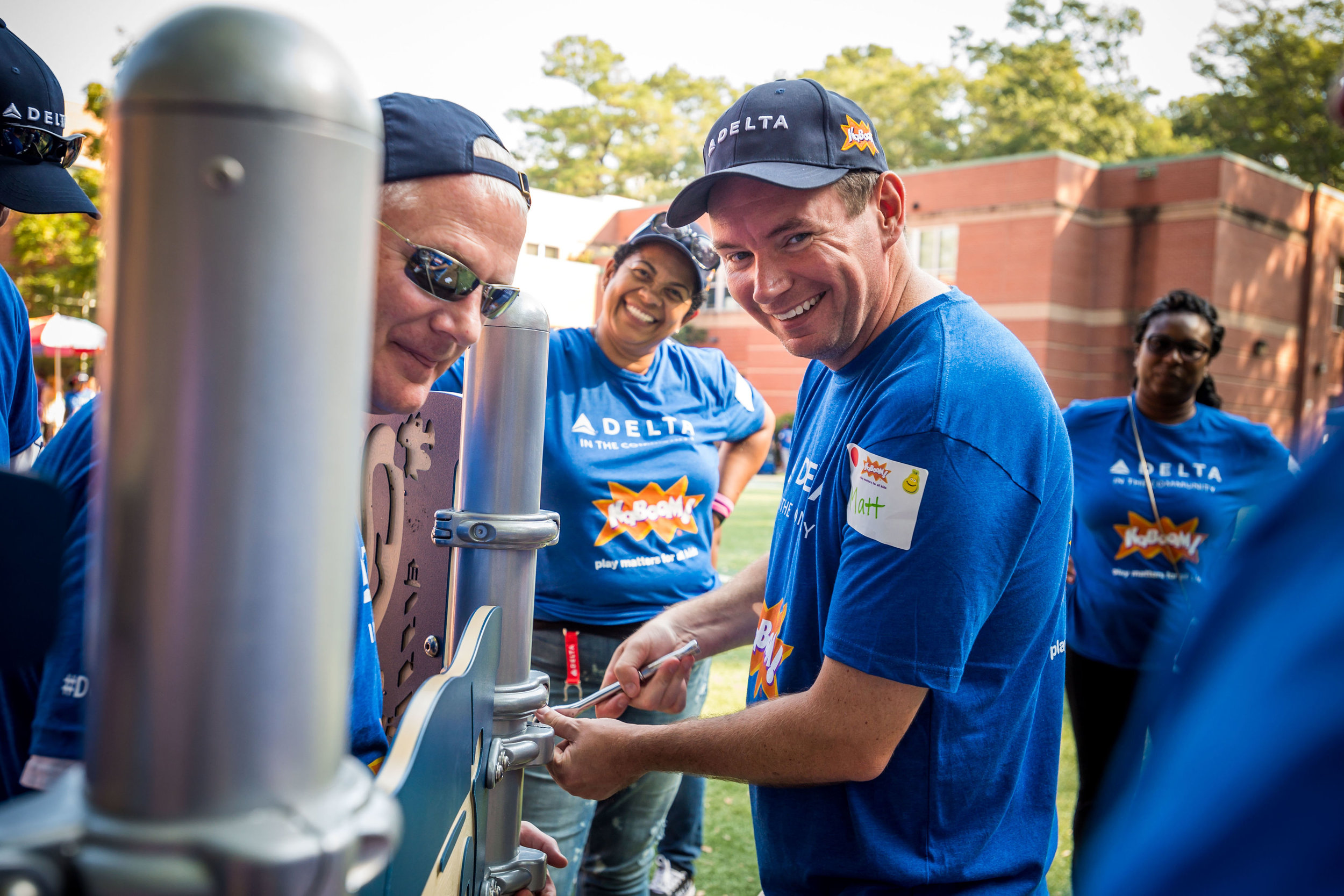
Photos by Chris Rank
Each one of our staff and members of our board lead projects, our friends and sponsors at iVision not only put a team together to volunteer at Helping Mamas, but they also joined Jay Cranman, Hands On Atlanta President and CEO on a guided tour of 3 projects, filming the entire adventure (coming soon). Almost 150 task leaders and Hands On Atlanta Civic Leaders stepped up to lead teams and oversee specific project tasks. Hey, someone had to show all these volunteers how to build the bench and plant the tree!
“I had a great day visiting our school sites and seeing so many Atlantans serve on a Saturday! Special shout out to Louis on your team and the volunteers from IBM who painted 3 levels of Price! We appreciate you and your partnership. Congrats on another great Hands on Atlanta Day and always encouraging us to #dosomethinggood.”
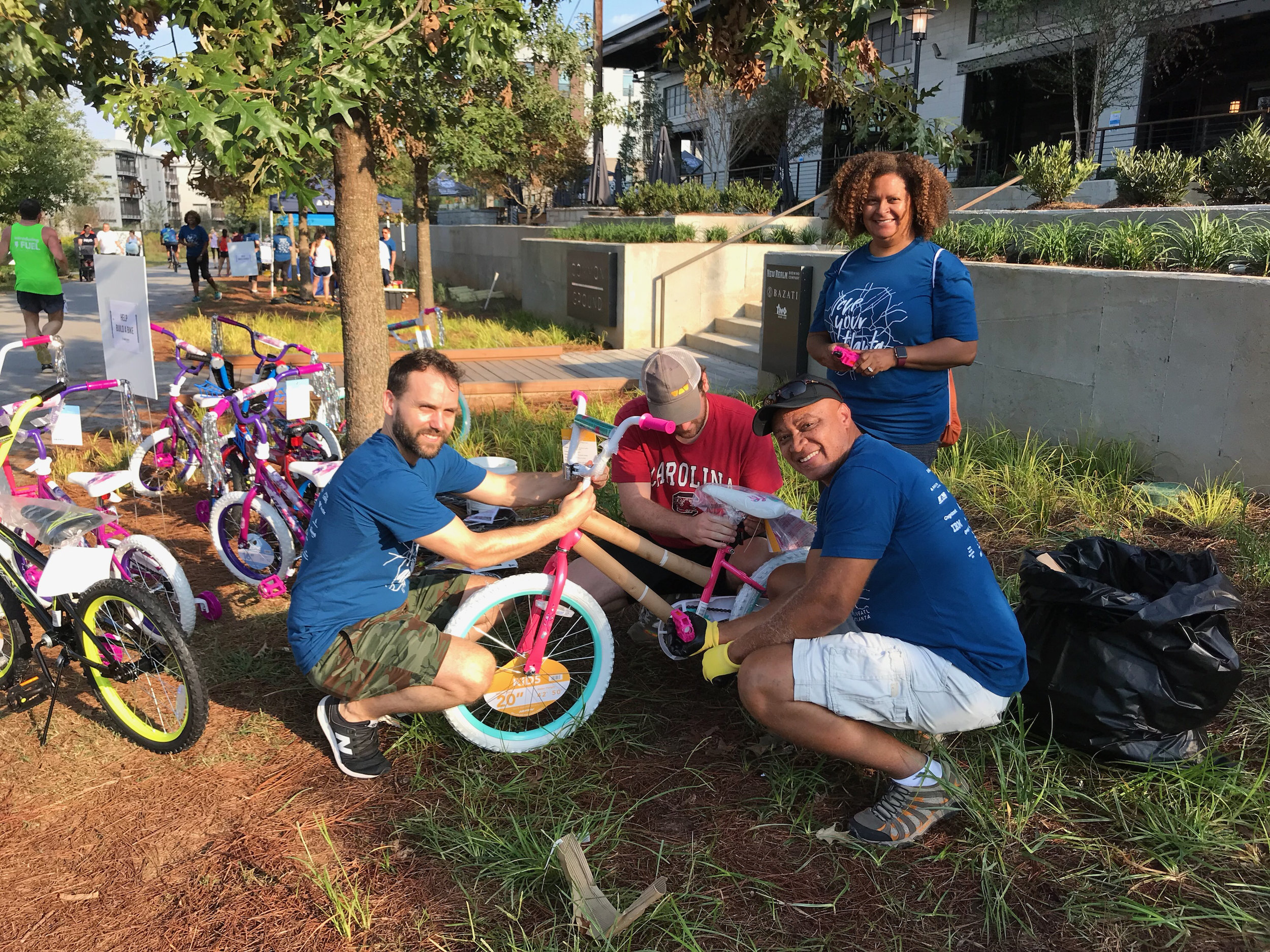
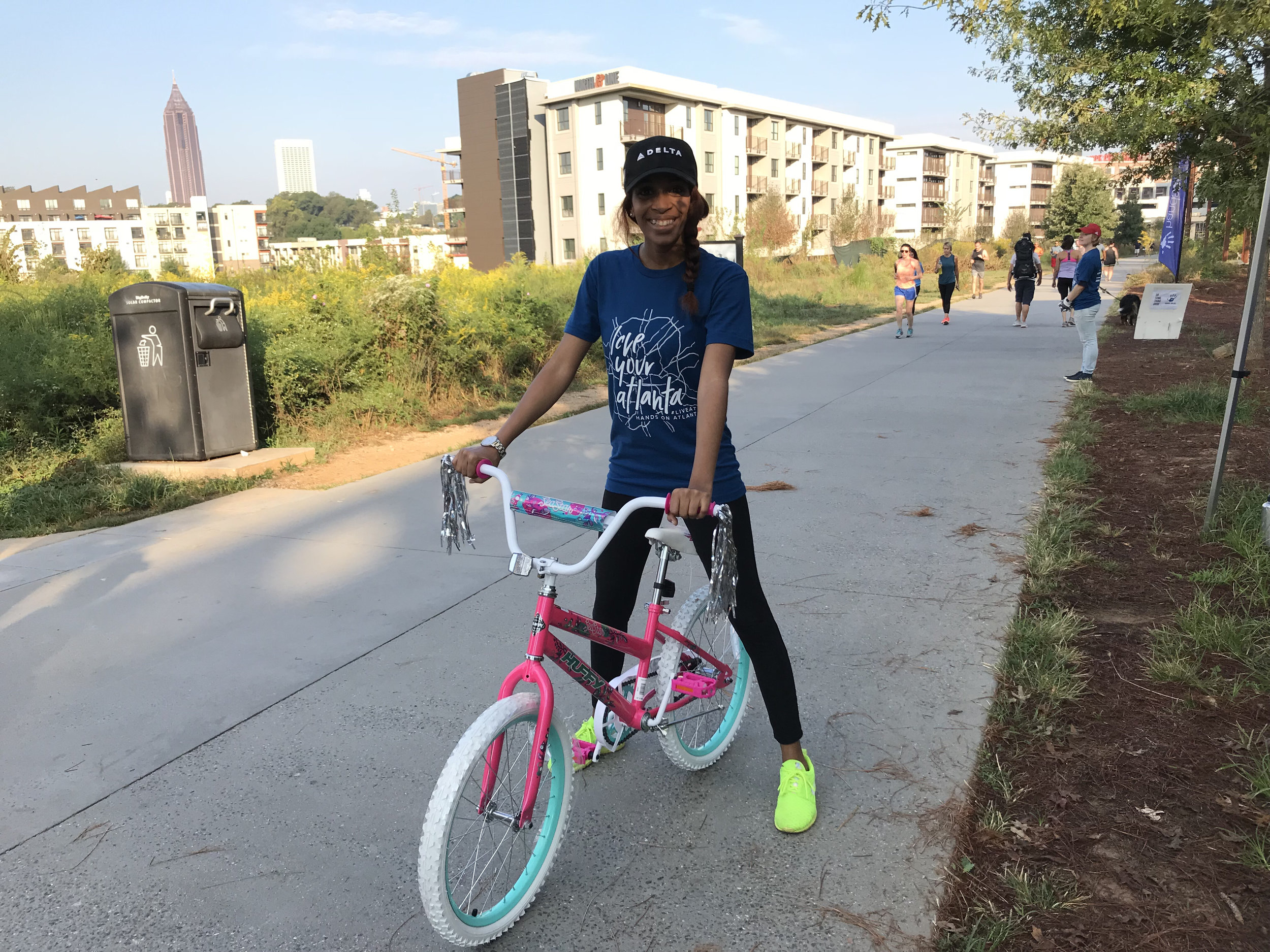
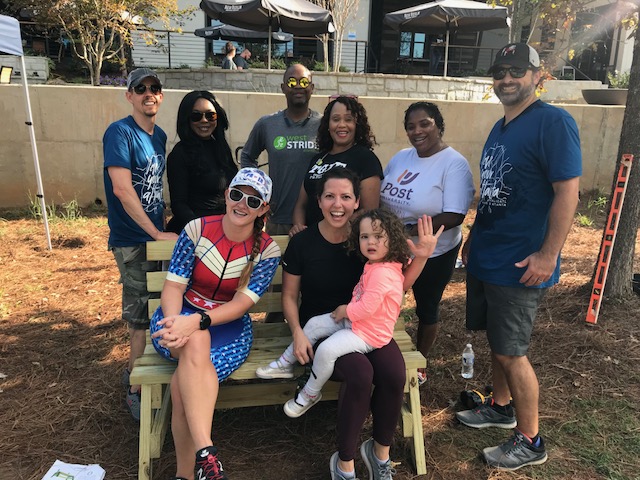
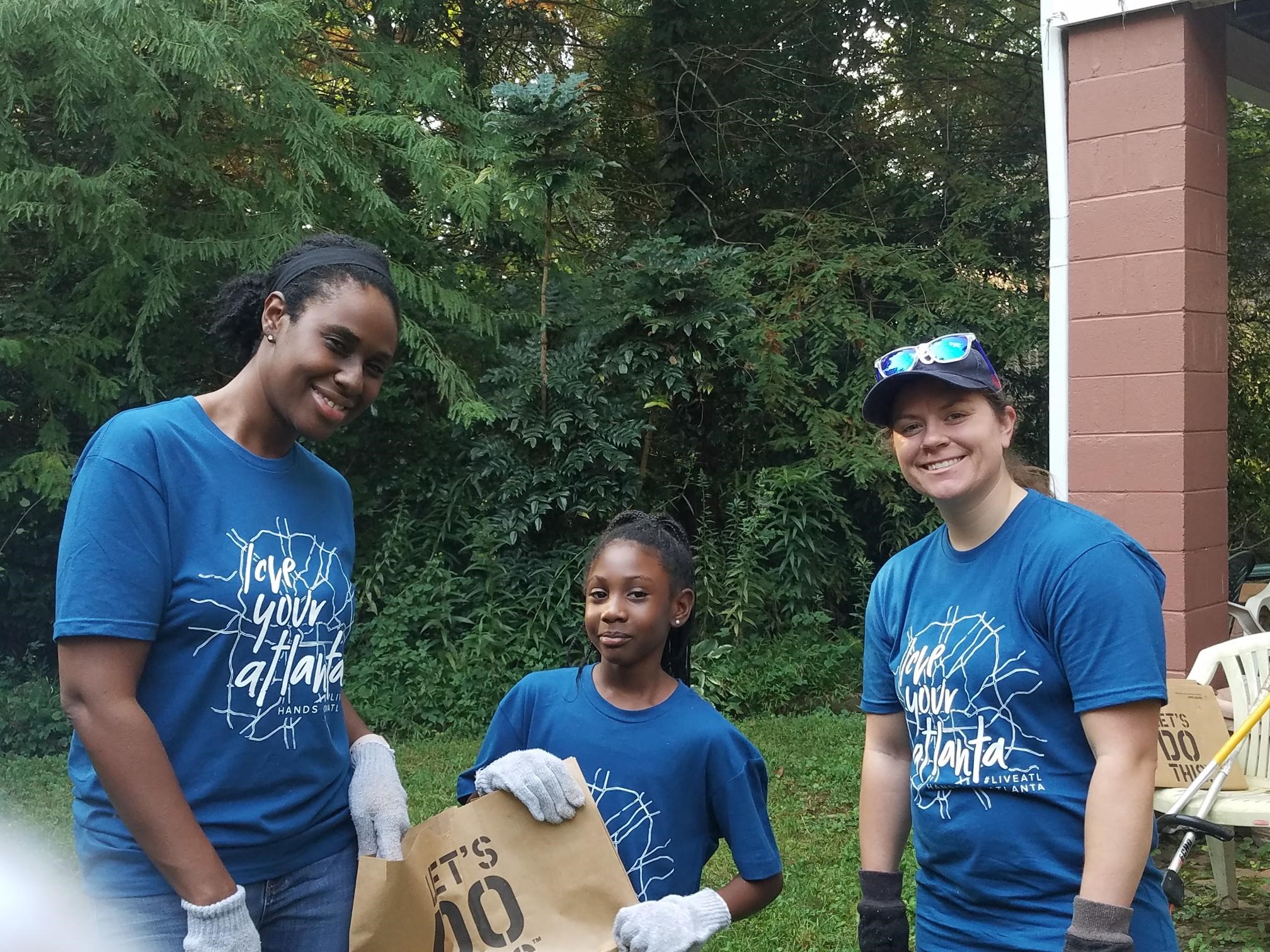
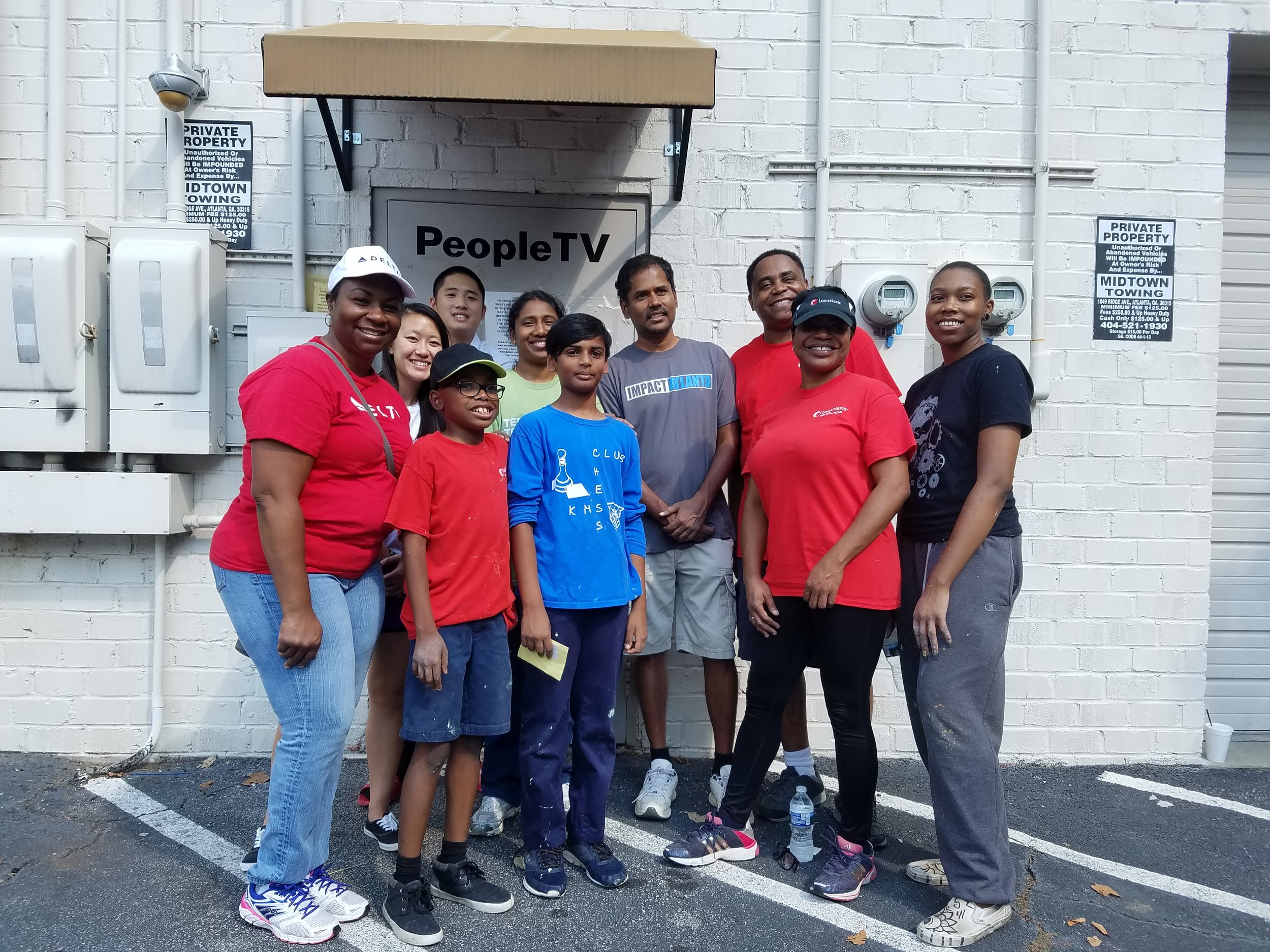
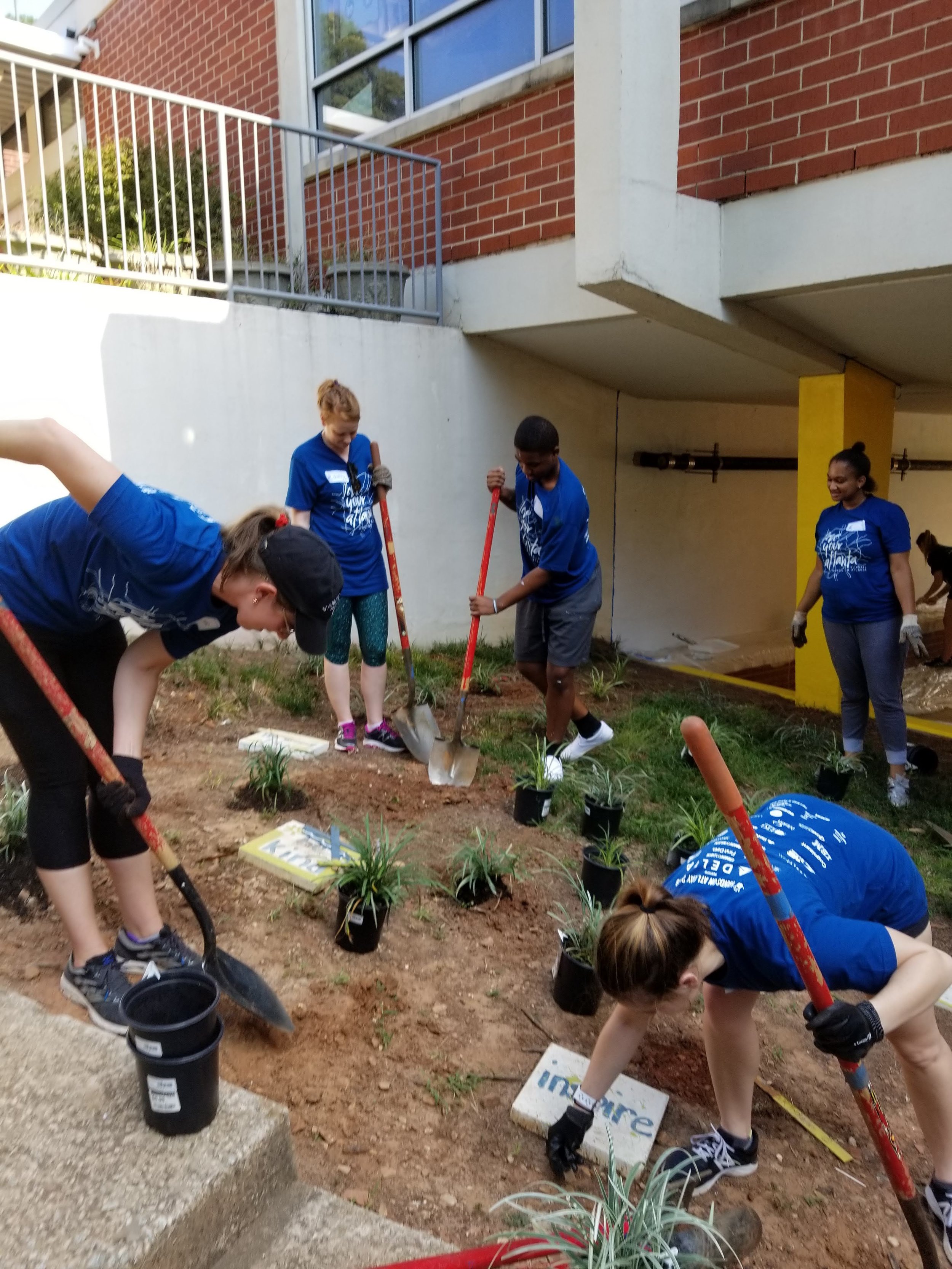
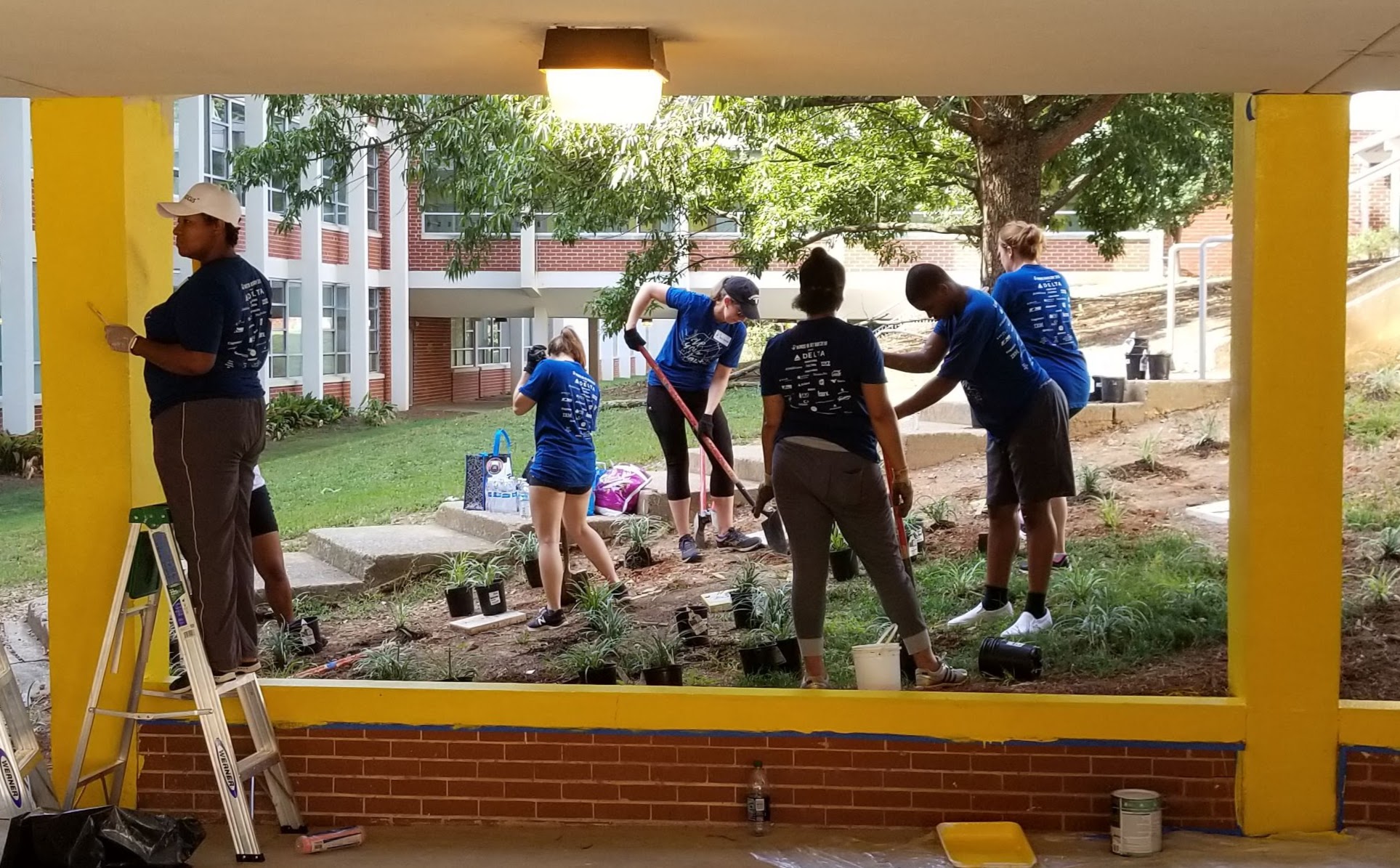
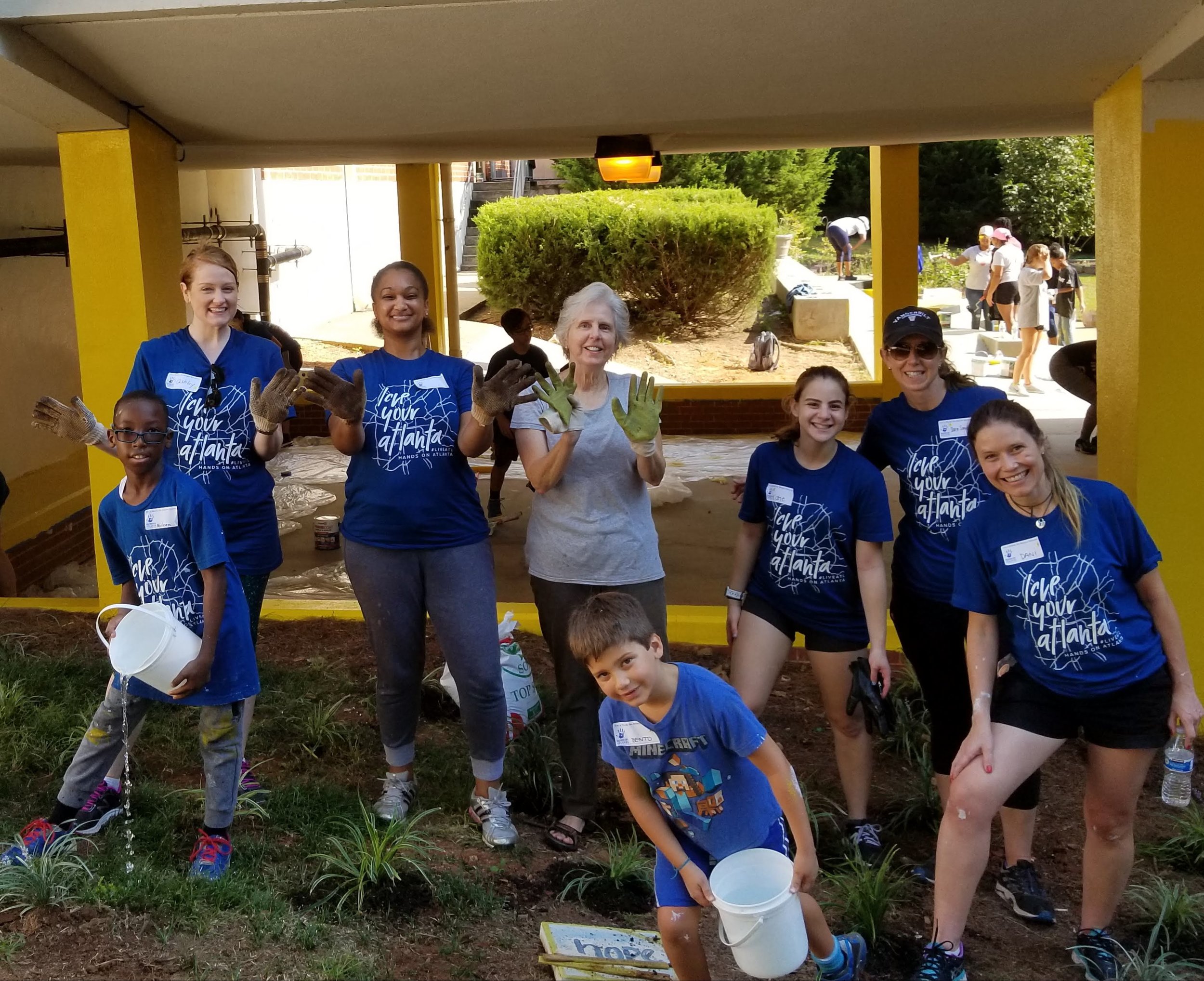
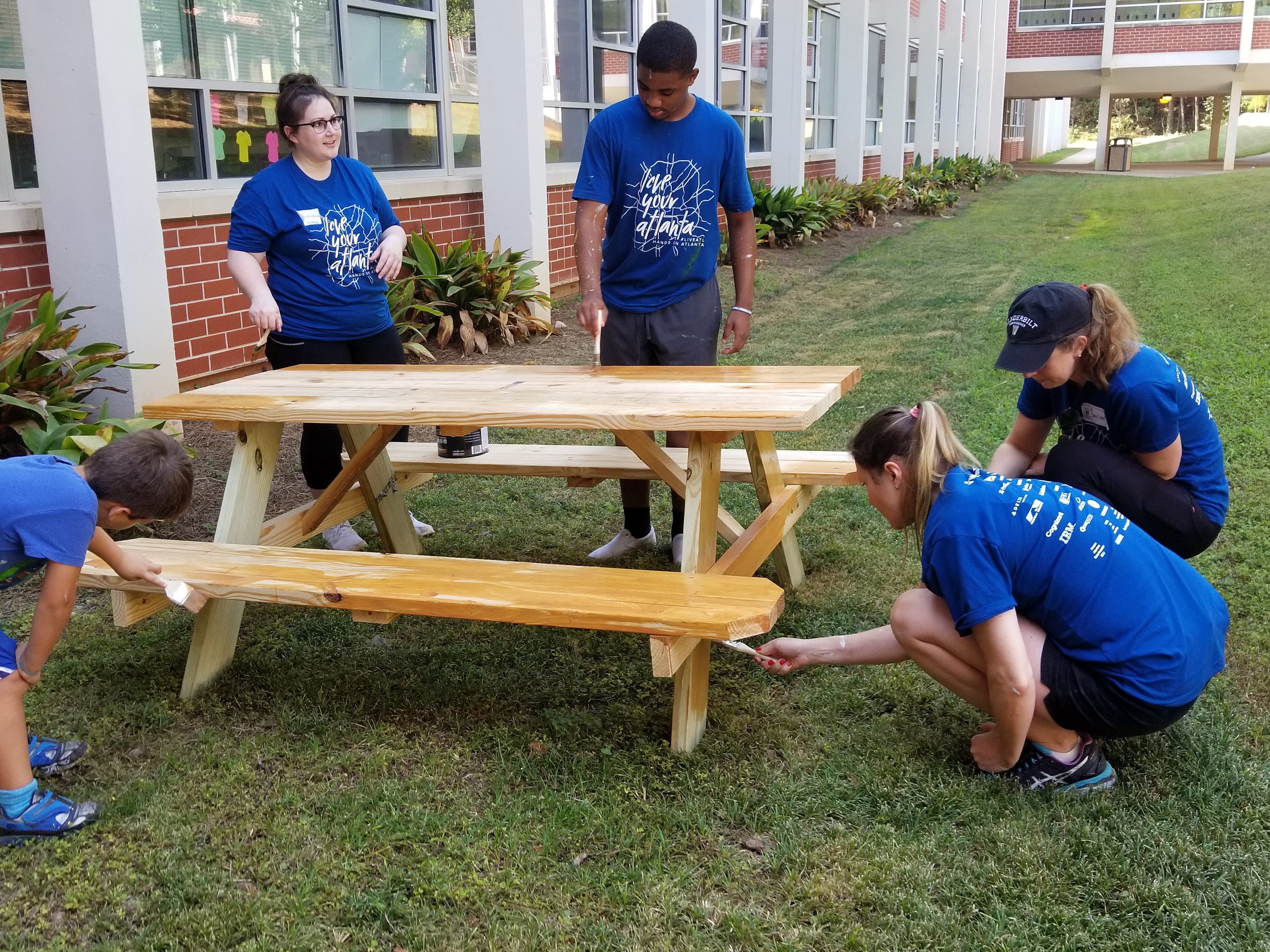
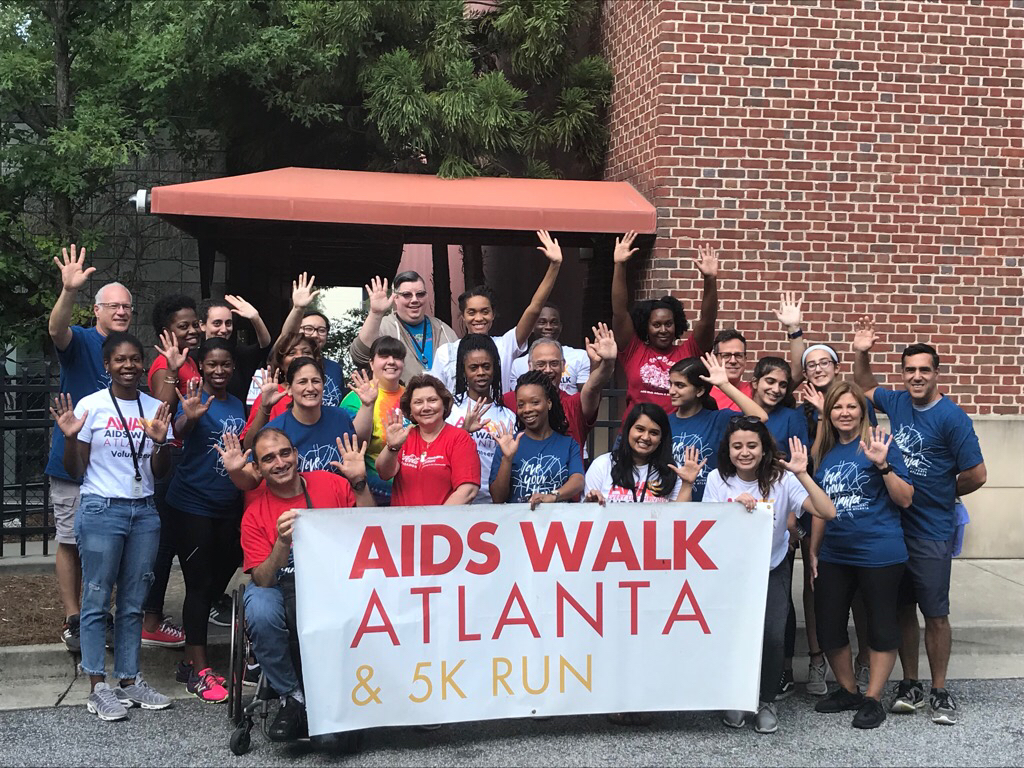
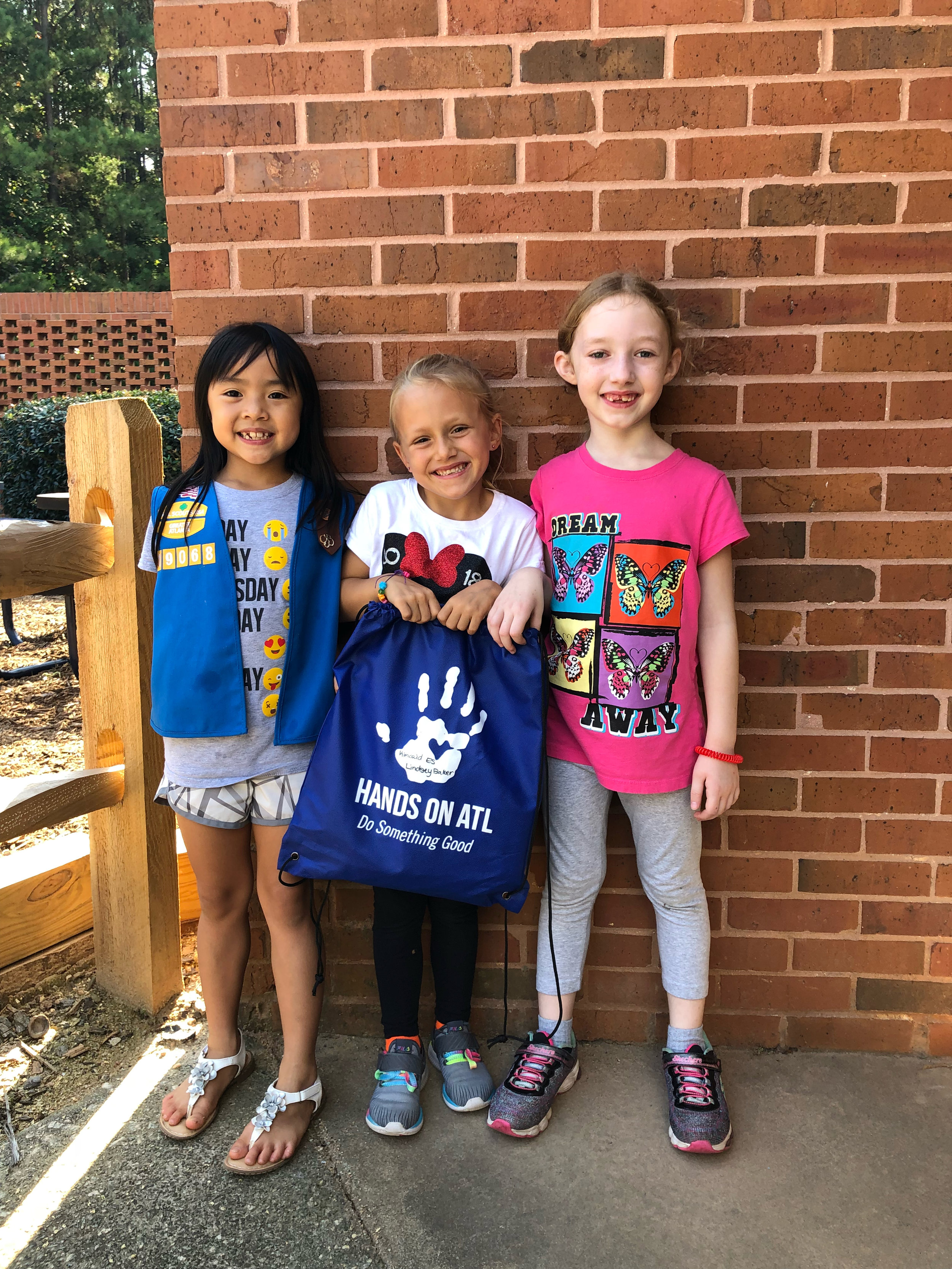
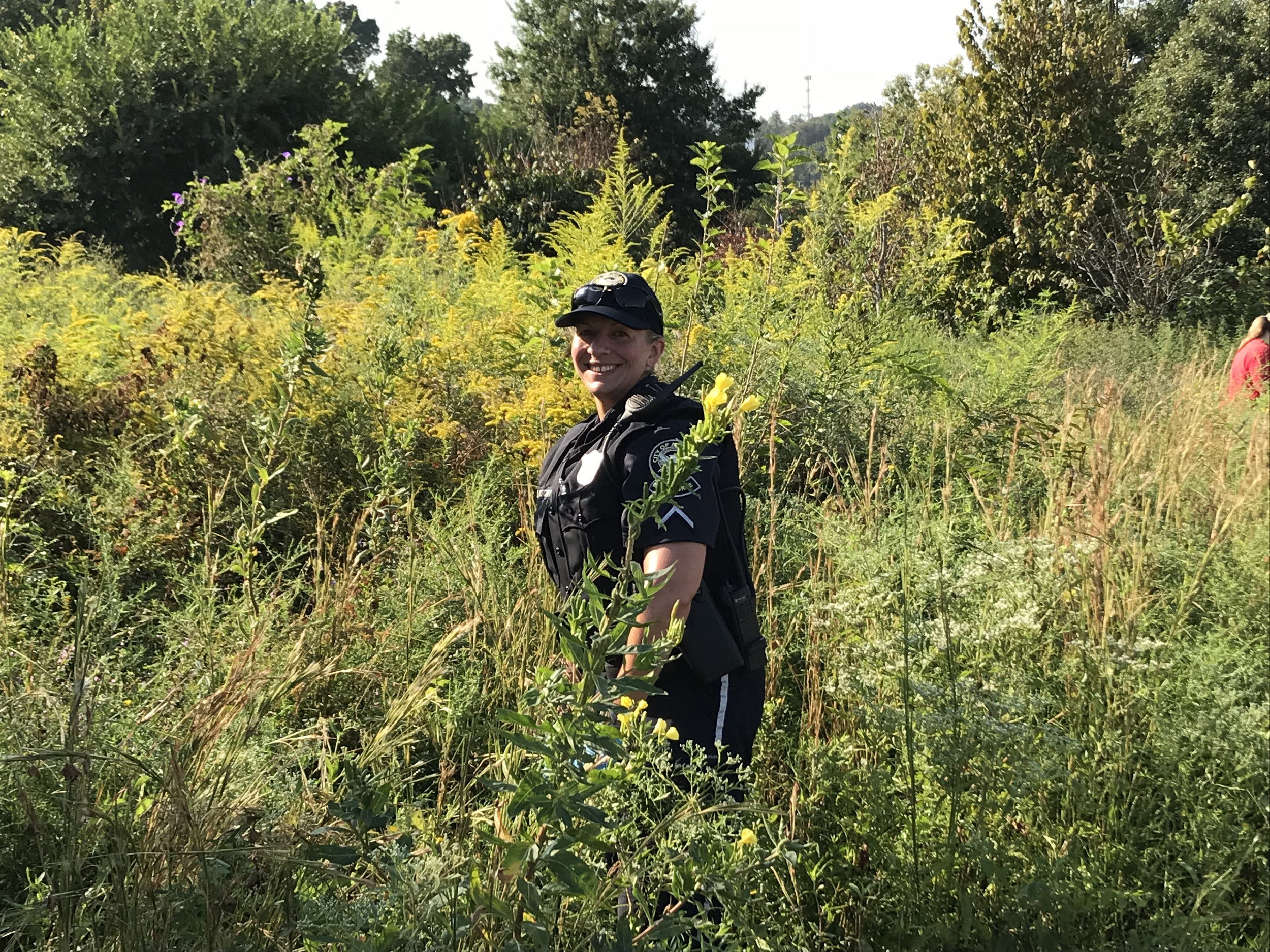
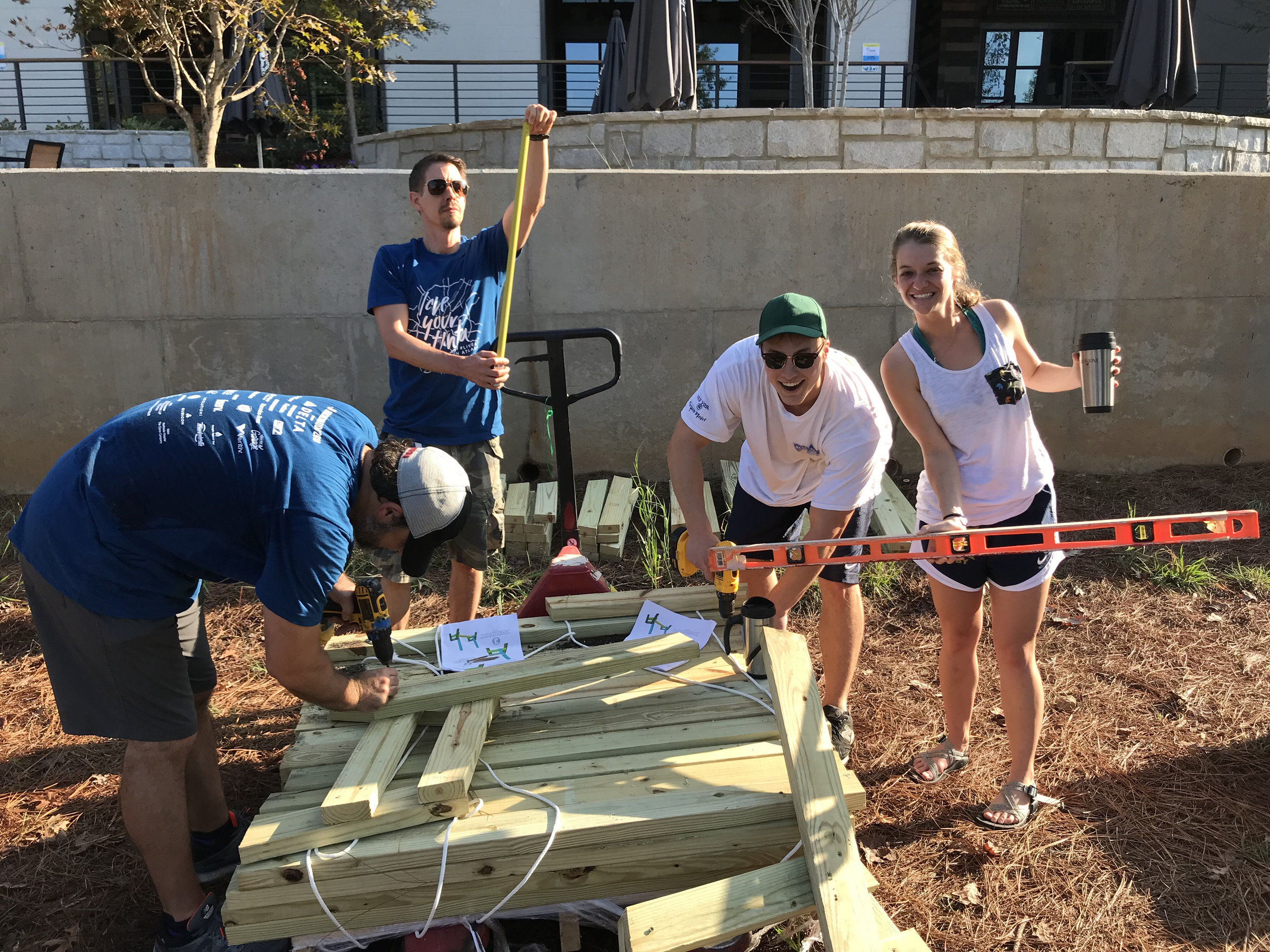
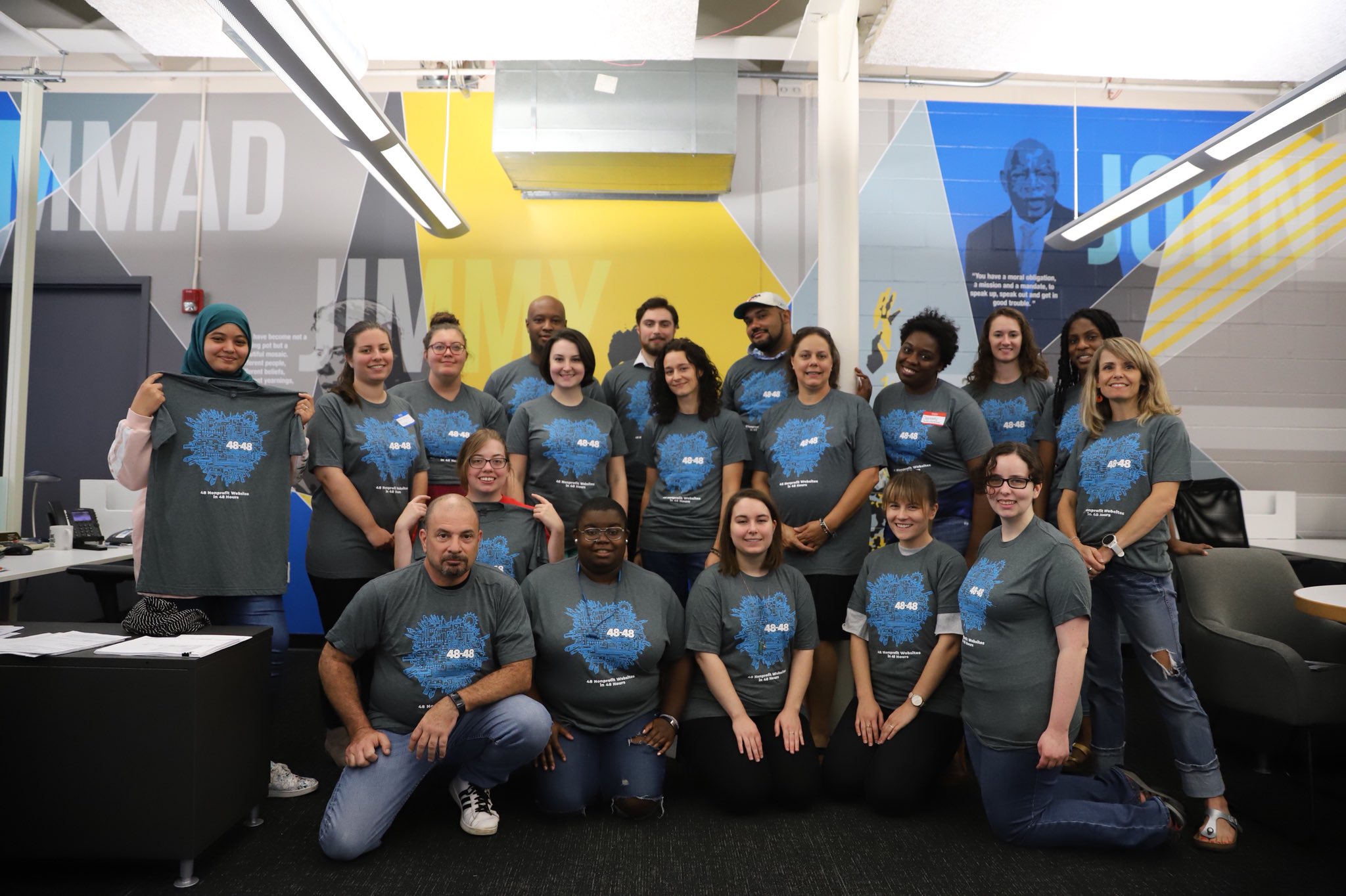
Around 10:00am we were the top trend on Twitter (lasting until almost 4:00pm) and that was thanks to everyone sharing their service! Over 100 volunteers stopped by the Delta Vacations pop up projects along the Beltline. Our new friends (and gracious hosts) at New Realm Brewery gave us the green light to experiment with this wild idea of 4 nonprofits - Atlanta Beltline Partnership, Trees Atlanta, Park Pride, and Hands On Atlanta all coming together to build park benches and bikes, pull weeds and paint terra cotta pots. The team at 48in48 lead a design day, where skills based volunteers came together to create an awareness campaign, highlighting some of Atlanta’s biggest challenges and how you can help be a part of the solution (coming soon).
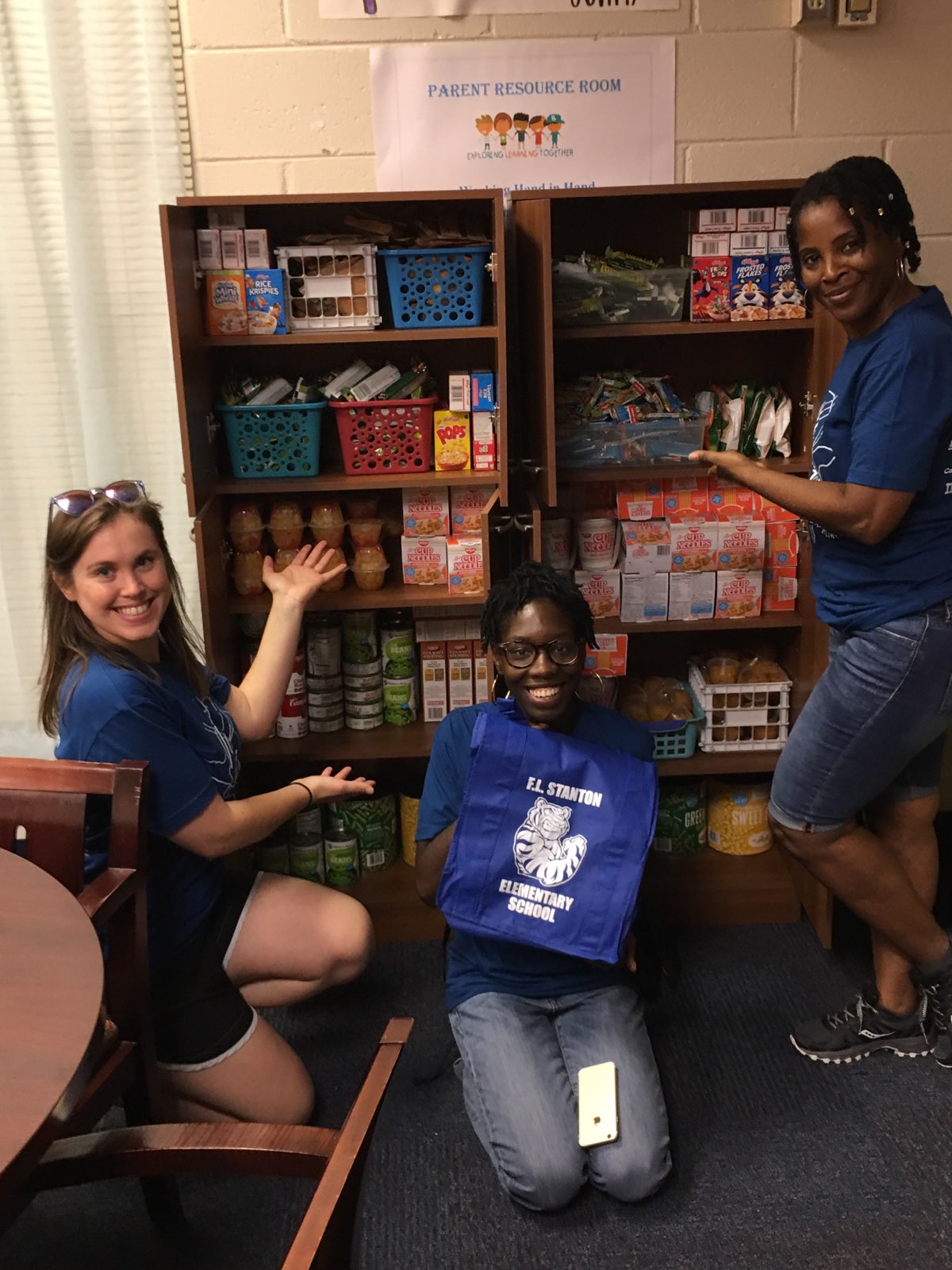
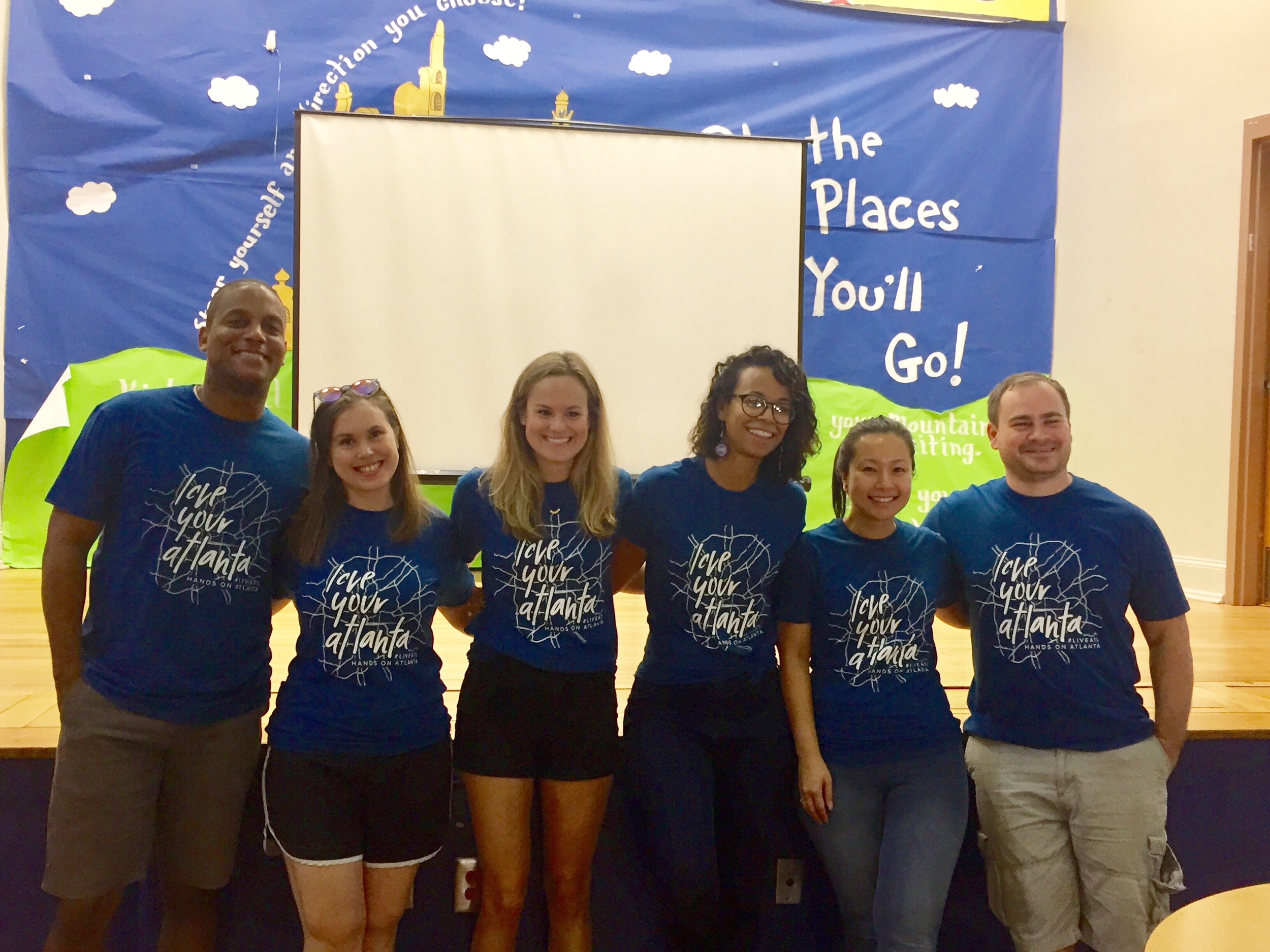
Our Changemaker Board of young professionals volunteered at Frank L. Stanton Elementary, while for the first time ever, we had all of the Hands On Atlanta Discovery program sites buzzing at 8 partner schools across metro Atlanta. That means parents were engaged, volunteers tutored and mentored, and more than 500 kids had fun doing STEM activities!
You might be asking yourself, self that all sounds amazing (a real community effort) but what does it all mean? Well, I’m glad you asked because we ran a few numbers and here’s a few things we accomplished:
34 community spaces and parks were built or improved
18 gardens were built or improved
9 schools received a makeover, including 4 new outdoor classrooms
65 benches and 28 picnic tables were built
How does all this happen? Here’s a quick snap shot of some of the nuts and bolts:
1385 pair of gloves
235 shovels
57 wheel barrows
400 paint brushes
“The support this year was phenomenal! We truly appreciate all the supplies and equipment, the snacks and t-shirts, the leadership, our corporate sponsor, LabSolutions and the other volunteers, who provided the smiles, sweat and commitment. They really worked hard and it was really hot out there! So keep up the good work. ”
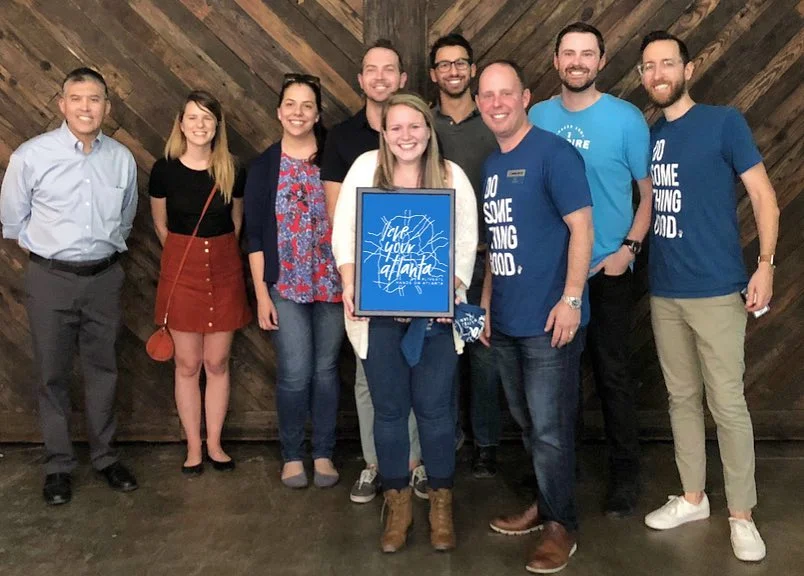
And who could forget the Hands On Atlanta Day Kick-Off Party at the Monday Night Brewing Garage on Wednesday?! 300 ATLiens came out for brews and fun, 20 nonprofits showed off the awesome work they’re doing, and we unveiled our volunteer t-shirt design contest winner! Thanks to all the designers, the sponsors and judges, and of course YOU for more than 1,600 votes to help determine the final 5.
“Saturday was flawless! You guys did such an amazing job especially with multiple projects going on at one time in one space. There was never a time in which I thought we needed more people or more supplies. You guys had it all planned and ready to go for us. I look forward to next year’s Hands on Atlanta Day!”
There’s more, so many more incredible, selfless individuals who helped pull off another impactful Hands On Atlanta Day. Thank you to everyone, it really does take a village. This was year 29 of Hands On Atlanta Day and we’re already looking forward to seeing so many of you back for our “dirty” 30 next year. Stay tuned!
Prepping for Florence and the Machine
Hurricane season has become the “new in-laws” here in the south east. You know they’re coming, but you could really do without them. To help prepare for the inevitable, we caught up with with our Family Literacy Programs Manager, Amanda Bisgaard, for an interesting convo about how volunteers can best help during a disaster.
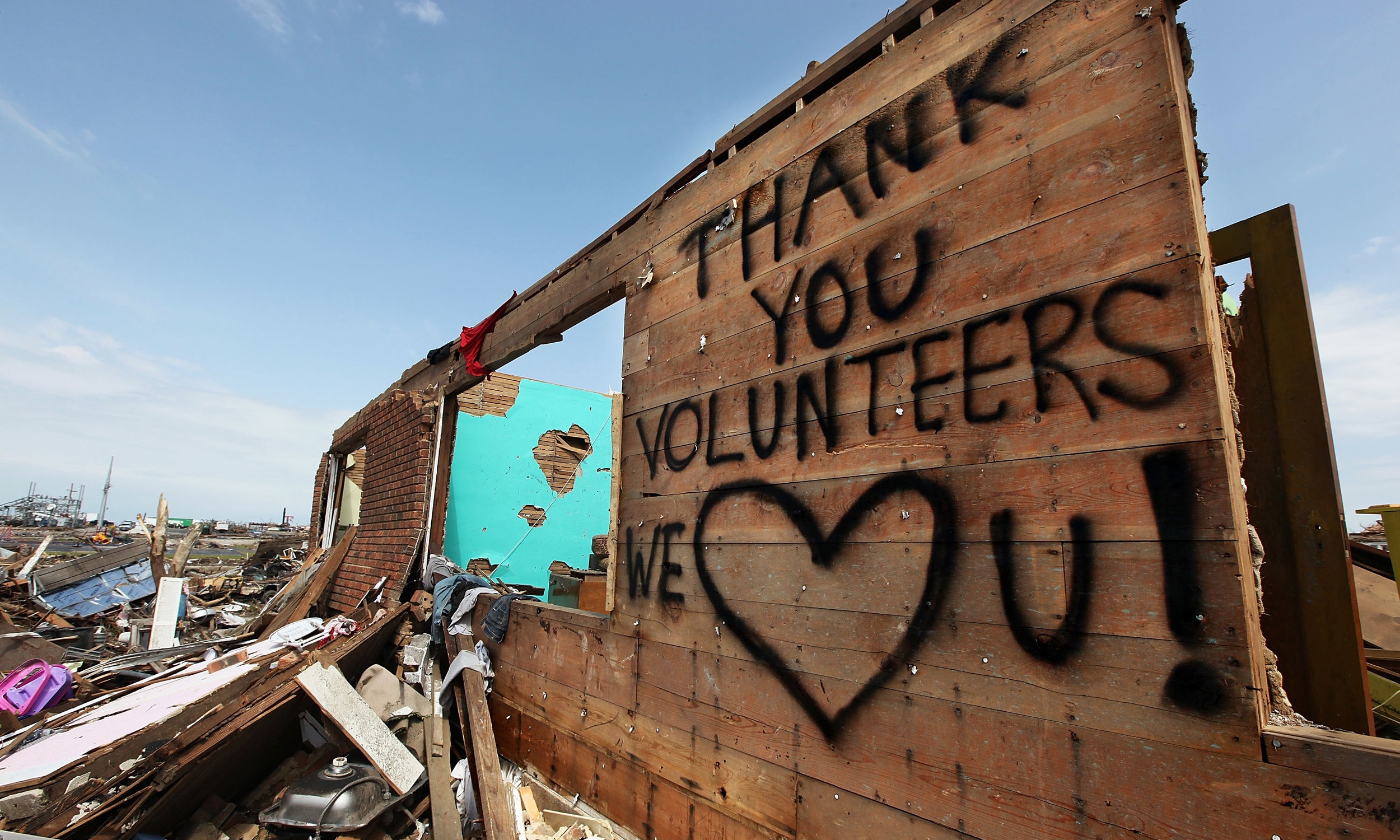
Hurricane season has become the “new in-laws” here in the south east. You know they’re coming, but you could really do without them. To help prepare for the inevitable, we caught up with with our Family Literacy Programs Manager, Amanda Bisgaard, for an interesting convo about how volunteers can best help during a disaster.
Amanda is a former Volunteer Coordinator at the Red Cross and an AmeriCorps Alum, who’s forgotten more about disaster preparedness and relief efforts than most of us will ever know. Check out our Q&A to ensure you’re ready to help if and when duty calls. Hopefully, Florence turns around and goes home, but just in case, get prepared.
TIM: What is the most important thing volunteers need to know when it comes to hurricane or disaster relief?
AMANDA: First and foremost, if you’re interested in volunteering, go through a trusted organization (Red Cross, Habitat for Humanity, Team Rubicon, Salvation Army, United Way, All Hands, etc.) aligning your specific skills to which organization can leverage most - working with people, admin tasks, long term in the field, moving and cleaning, etc. Try to avoid what disaster relief organizations call “self-deploying”. A lot of times you will put yourself in danger and add to some of the main issues (traffic, booked up hotel rooms, and evacuating people from an area) local communities face during critical times of a disaster. In addition, everything will most likely be blocked off to people who are not authorized personnel, so this isn’t the smartest way to help, especially in the first few days.
During a hurricane, the first few days are kind of a waiting game. Waiting for the water to go down, waiting for trained emergency responders to evacuate people from houses, waiting to see what the damage is, etc. There isn’t much you can do during the storm and immediately after.
TIM: What about donations? I often feel compelled to things people need.
AMANDA: If you are interested in donating, do not donate supplies! Everyone has the best intentions by collecting clothes, or food, or items to donate to people who were impacted, however this is not an effective way to help victims.
A quick story about that, after the Sandy Hook shooting, thousands of people had the idea to send teddy bears to the town of Newton, the donations filled an entire warehouse where there were over 65,000 teddy bears collected - which is amazing! But in reality, this was not at all helpful. It took thousands of hours to sort and ultimately donate to someone other than the families impacted. The same thing happens in a disaster. It takes many hours and many hands to sort items and a lot of organizations have requirements of what can be donated. (must be new, must be unopened, etc.)
Donate money that can be given to families who have lost everything, so they can choose what they need.
TIM: Got it, donate money. It’s the most helpful. What’s up with the acronym VOAD? I’ve seen this more and more with our efforts to support disaster. Should volunteers know what it is?
AMANDA: VOAD stands for Volunteer Organizations Active in Disasters. Most cities have a VOAD that meets regularly so that they can be prepared when disaster strikes and knows what each organization’s part in the relief is. For example, they’ll determine who will shelter and where, who will do casework, who will help muck and gut houses, etc. When a disaster does strike there is always a disaster operation center set up where there is a representative from every organization to give updates on what everyone is doing. So VOAD is a great resource for nonprofits to help, but also for volunteers to know where they support.
TIM: VOAD is a good resource then. I’ll check that box. Any other resources or suggestions to those thinking about volunteering during a disaster?
AMANDA: I think most importantly, you need to be prepared yourself. After working in the disaster relief field, I have realized how apathetic so many people are, including myself. It is so easy to say “oh I will change that smoke alarm next week” or “that will never happen to me.” Don’t be that person. Look into what you can do to be prepared for a disaster (like reading and sharing this blog).
For hurricane specific preparedness, don’t drive through standing water! Every year people die from doing this. Just 2 feet of water can sweep your car away. You can also make a preparedness kit. You don’t need to be an all-out “prepper” with a basement full of supplies, but a backpack with water, a flashlight, nonperishable food, etc. is a great idea.
Download the American Red Cross Emergency app. I love this app! It tracks hurricane progress, wind speed, and where all American Red Cross shelters are. It also includes what to do before, during, and after a disaster, and a first aid kit if you encounter an emergency and don’t know what to do.
Here’s a quick recap of how you can get involved and help when disaster strikes:
Be prepared yourself.
Figure out what type of volunteer work you’re able to do/help with.
Find the organization that best fits your skills. Do NOT self-deploy.
Donate money, not supplies.
Points of Light put together this fantastic list on Twitter that showcases real time updates from all the major and local parties involved in the Florence preparedness efforts. How are you preparing? Let us know on Twitter and we’ll share with our network.
Starbucks Service Fellows Rise and Grind at Hands On Atlanta
Starbucks and Points of Light team up to pilot an innovative, employer-led nonprofit capacity-building program, providing select Starbucks retail partners (employees) the opportunity to serve with a local nonprofit in their communities

Starbucks and Points of Light team up to pilot an innovative, employer-led nonprofit capacity-building program, providing select Starbucks retail partners (employees) the opportunity to serve with a local nonprofit in their communities
We recently added 2 new friendly faces to the office, thanks to a partnership from Points of Light and Starbucks. The Starbucks Service Fellows is an innovative, employer-led service program inspired and informed by national service. In total, 36 Starbucks retail partners (employees) in 13 cities across the United States will serve with a Points of Light affiliate, collectively providing more than 17,000 hours of community service. Hands On Atlanta was selected as one of the affiliates to help with the initial six-month pilot!
“We believe this bold program, designed in partnership with Starbucks, will redefine corporate engagement and the private sector’s ability to support civic engagement,” said Natalye Paquin, president and CEO of Points of Light.
Listen to our conversation with Maya, Julie and Elaine on this week's episode of The Weekly High 5 to learn more about this program and to catch a few coffee secrets from the baristas!
For this pilot, we're aligning with one of Starbucks’ global social impact priorities: hunger. The Starbucks Service Fellows will be working about 20 hours per week for the next six months helping build volunteer capacity at 10 food pantries as part of our partnership with the Atlanta Community Food Bank. In addition, they'll also be helping with our Meals4Kids program.
"The Starbucks Service Fellows are not just doing direct service, but they are building something Hands On Atlanta is going to use for years to come," said Elaine Hudson, Associate Director of Nonprofit Services.
The program is a win-win all around. Starbucks worked with Points of Light to match partner volunteers with local affiliates, giving participating organizations the talent and support they need to maximize their impact locally, while enabling partners to serve their communities and gain experience and skills in the nonprofit sector, such as project management, volunteer recruitment, community engagement and stakeholder relationship management.
“Starbucks partners have a passion for service both in and out of their stores. The Starbucks Service Fellows program powers that passion through philanthropy and partnerships to have the greatest impact” said Virginia Tenpenny, vice president of global social impact at Starbucks and executive director of The Starbucks Foundation.

Left to right: Maya Tannenbaum, Elaine Hudson, Julie Terlemezian
Meet the Hands On Atlanta Starbucks Fellows
Maya Tannenbaum (left)
Maya is a junior at Georgia State University pursuing a degree in Social Work. Georgia has been her home for her entire life, but she hopes to eventually travel and live in another major city to help other communities in need. Maya has always had a fascination with society and its inner workings, and can't wait to experience all of the adventures the next six months will bring. She's excited to be working with such a talented team at Hands On Atlanta!
Julie Terlemezian (right)
Julie Terlemezian has been dedicated to helping others and making the world a better place since her teens, when she spent five years in a leadership role for her youth group in Marietta, Georgia, and later in the Southeast Region. When she attended The Evergreen State University in Olympia, WA, she helped inform and educate the student population as the managing editor for the student newspaper, The Cooper Point Journal. Currently, Julie works as a Shift Supervisor for Starbucks in Sandy Springs. Julie is thrilled to have the opportunity to serve the community as the Starbucks Service Fellow in the Points of Light pilot program with Hands On Atlanta. She resides in Smyrna with her beloved cat Luna.
Love Atlanta Turns (and Builds) the Tables on Service
Sometimes you just want to sit down on a picnic table and enjoy a little sunshine. Pull the lap top out, crank out some emails, drink an ice cold Coca-Cola, and enjoy a little peace and quiet. You know what I mean?
Luckily for the staff at Hands On Atlanta, this fairy tale story is now a reality, thanks to our friends at Love Atlanta! As part of our big office renovation, (and some impeccable timing) their team chose to build 3 brand new picnic tables for our outdoor patio as a site project for their annual week of service. So, the organization that hosts and leads volunteer projects 24/7/365 has now been on the receiving end of one. Yes, the literal and proverbial tables were turned. Things felt pretty good from this side of things, a little too good...
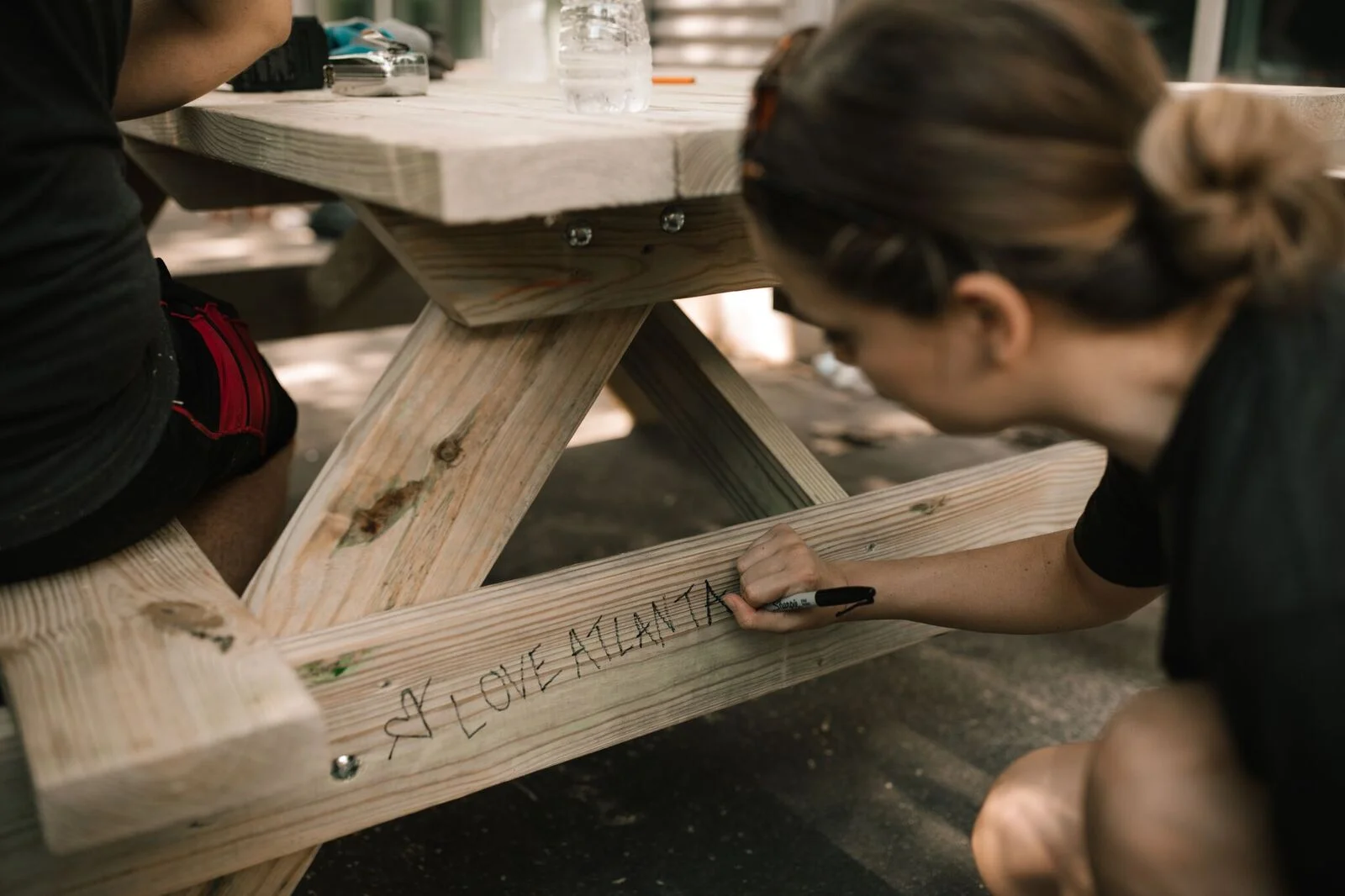
Sometimes you just want to sit down on a picnic table and enjoy a little sunshine. Pull the lap top out, crank out some emails, drink an ice cold Coca-Cola, and enjoy a little peace and quiet. You know what I mean?
Luckily for the staff at Hands On Atlanta, this fairy tale story is now a reality, thanks to our friends at Love Atlanta! As part of our big office renovation, (and some impeccable timing) their team chose to build 3 brand new picnic tables for our outdoor patio as a site project for their annual week of service. So, the organization that hosts and leads volunteer projects 24/7/365 has now been on the receiving end of one. Yes, the literal and proverbial tables were turned. Things felt pretty good from this side of things, a little too good...
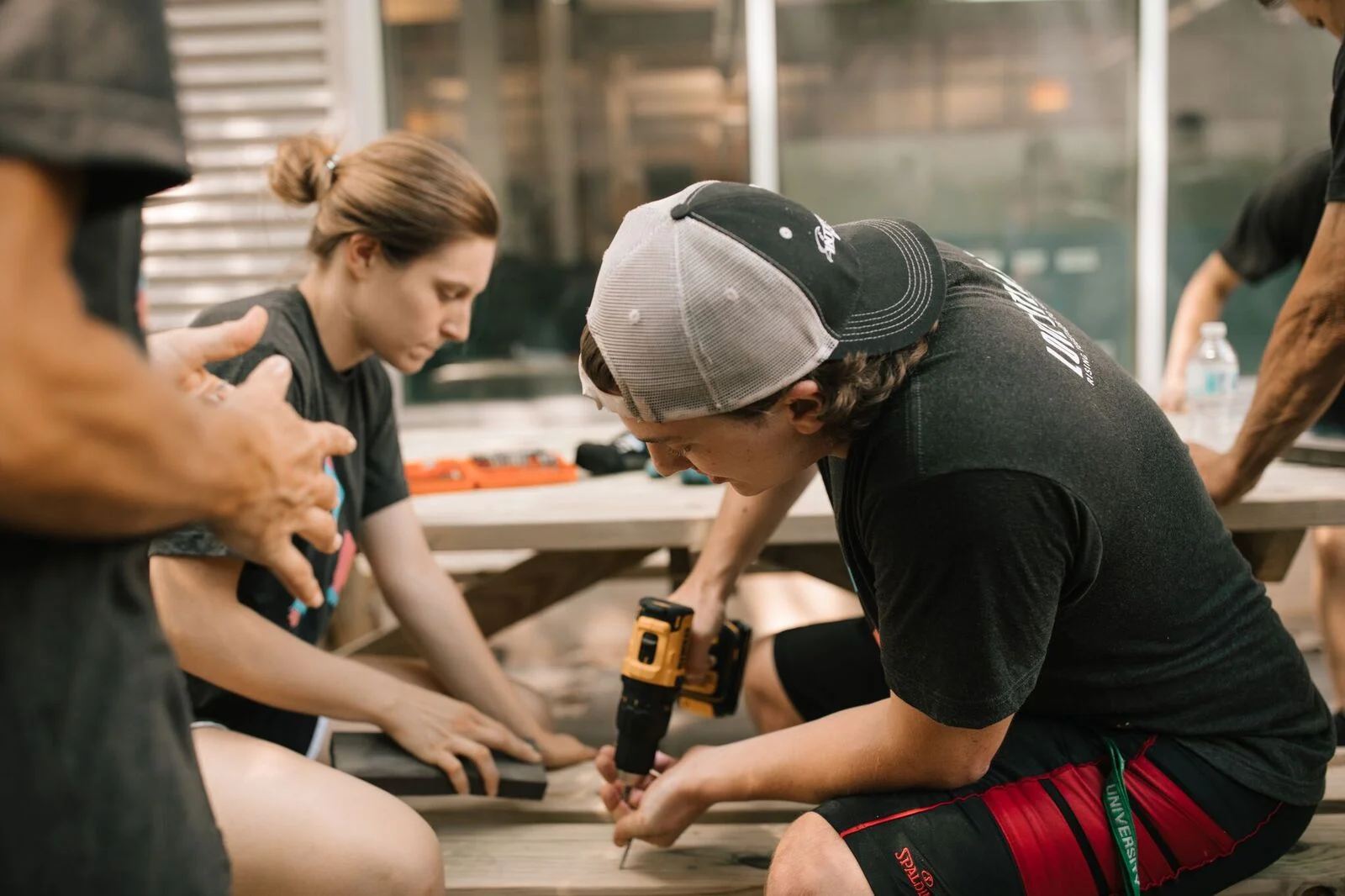
But we weren't the only nonprofit getting some help. Check this out, during the week of June 25 - 30, over 4,000 people signed in at almost 5,000 volunteer spots through 231 projects all over Atlanta. In total, their volunteers served over 14,500! Yo.
Other projects included some of our nonprofit partners (#twinning) where they packed meals with Open Hand, got dirty with several beautification projects along the Beltline, and sorted and packed grocery donations at the Atlanta Food Bank Product Rescue Center.
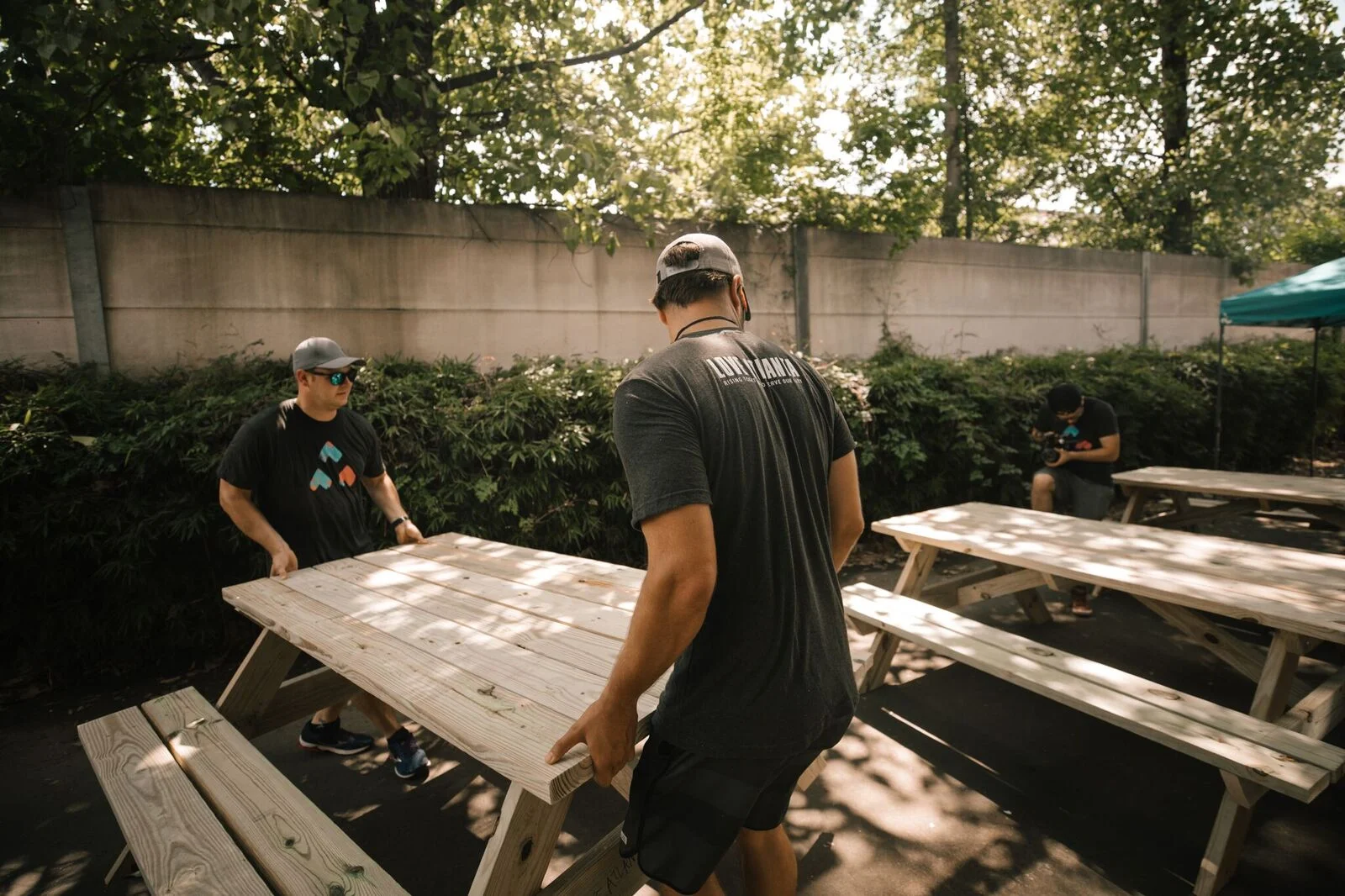
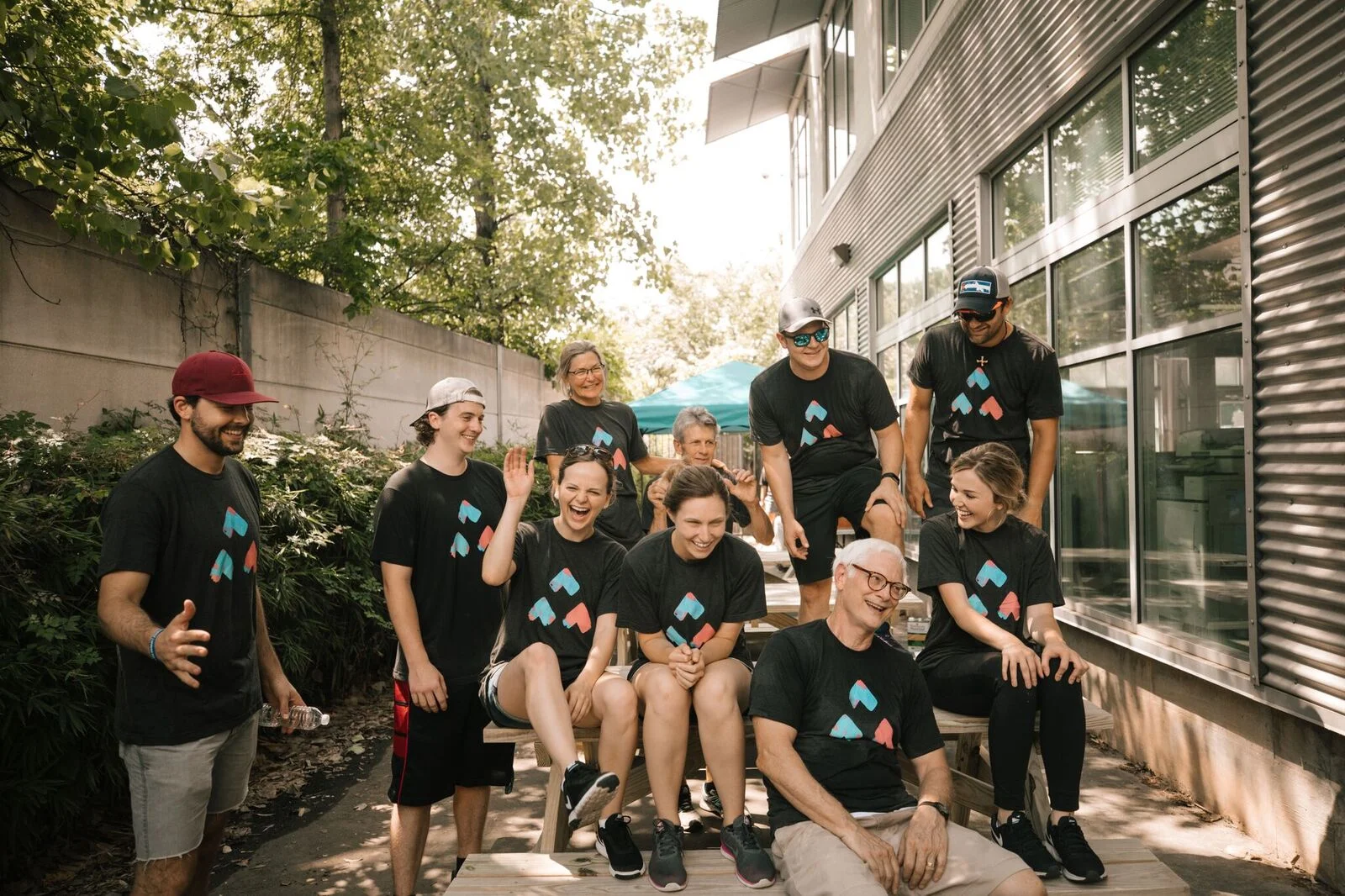
Congrats to the Love Atlanta on an awesome week of impact and we're sending the biggest virtual high five to the entire team (including the camera crew, task leaders, and members of our team) who helped give our hard working squad a fun and relaxing place to do something good! We hope to see you again next year.
For more information on Love Atlanta and to learn more about their week of service, visit their website at https://loveatlanta.com.
Too Busy to Love - A Reading from Civic Saturday
Atlanta, I have come to realize, is like America in all its complexity and contradiction. It is, as W.E.B. Du Bois said, south of the North but north of the South, challenging the assumptions and mores of each half of the nation. It’s a city that General Sherman had to burn to the ground so that Doctor King could rise from it a century later. A capital of slavery and a hub of black liberation. A city of rising prosperity and inequality, of suburban sprawl and status anxiety and immigrant influx and persistent poverty – and beneath it all, a web of faith communities and a corporate power structure that dominates civic life.
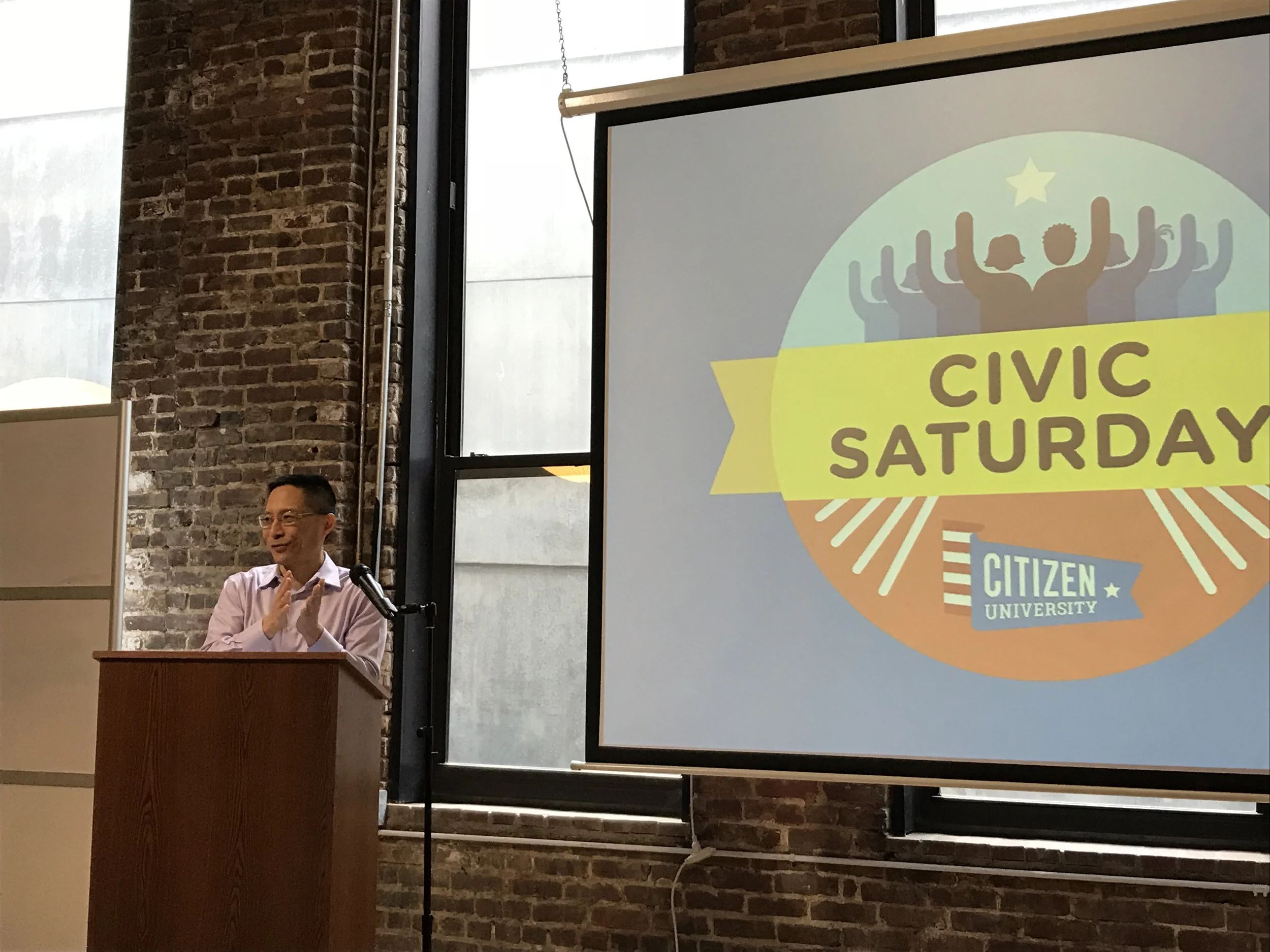
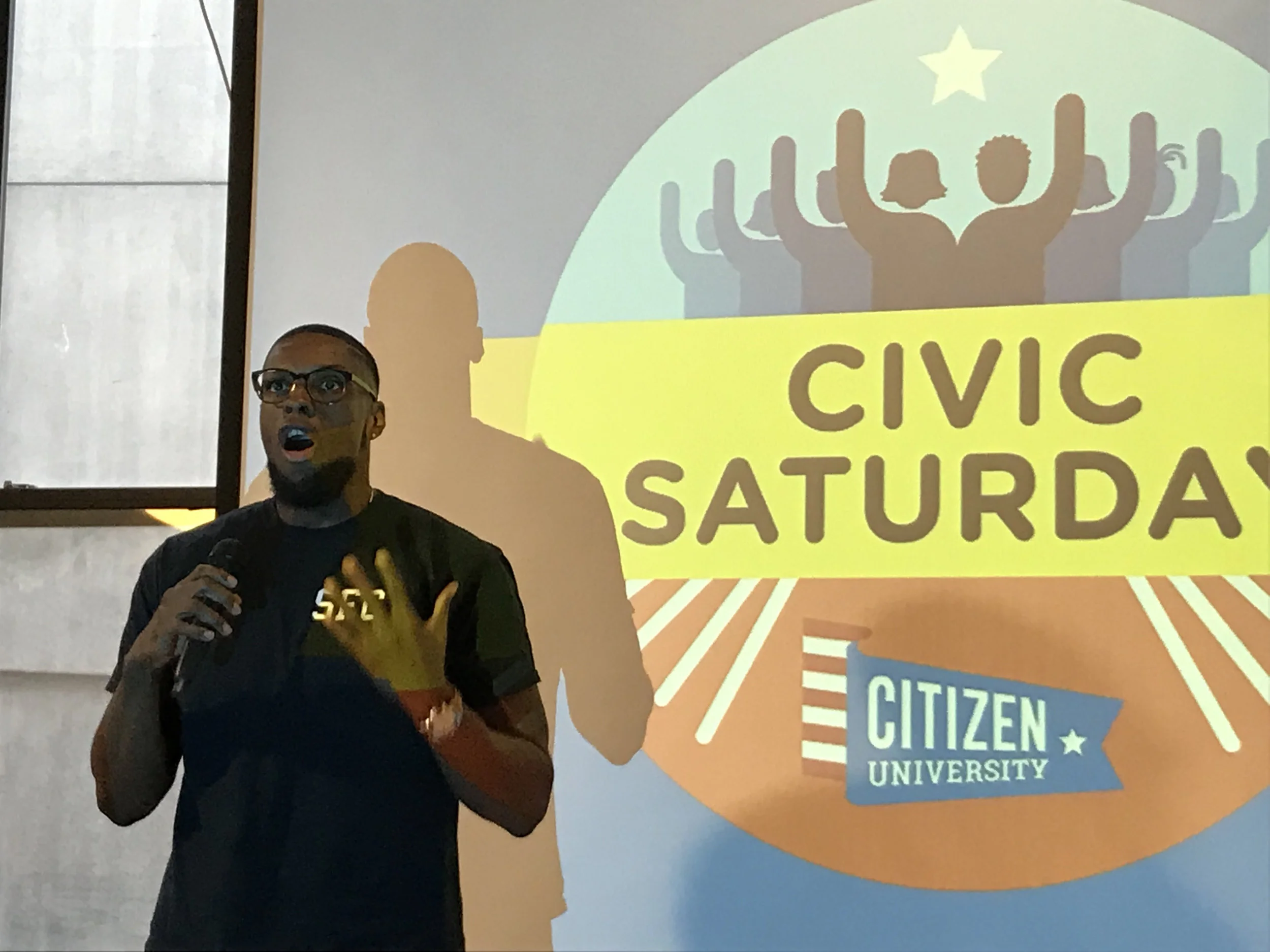
This "civic sermon" was delivered on June 23, 2018 by Eric Liu at the Center for Civic Innovation in Atlanta, GA.
Atlanta, I have come to realize, is like America in all its complexity and contradiction.
It is, as W.E.B. Du Bois said, south of the North but north of the South, challenging the assumptions and mores of each half of the nation. It’s a city that General Sherman had to burn to the ground so that Doctor King could rise from it a century later. A capital of slavery and a hub of black liberation. A city of rising prosperity and inequality, of suburban sprawl and status anxiety and immigrant influx and persistent poverty – and beneath it all, a web of faith communities and a corporate power structure that dominates civic life. This is a city with global cultural clout, where Queer Eye for the Straight Guy and Donald Glover’s Atlanta and The Real Housewives of Atlanta, to say nothing of Coke and Home Depot, all feed and form the American public imagination.
Taste the feeling. More saving, more doing. You all made that. This is a city with boosterism and salesmanship in its DNA, a place defined by ambitious slogans that become narratives that become agendas that become the actual ambitions of the people of the place. Though it was founded a century after Savannah and other ports of the region, Atlanta even as a small town claimed to be “Gate City.” After Reconstruction failed, it named itself the capital of the New South. In the 1920s, your chamber of commerce launched a national ad campaign called “Forward Atlanta” that led national corporations to locate here. Then in the 1960s, as other Southern cities became infamous for resisting civil rights violently, Atlanta came up with the its most famous slogan yet: “The City Too Busy to Hate.”
The pragmatism and tolerance of that slogan are deeply American. It could’ve been the slogan for the Dutch and English who built the polyglot markets of New Amsterdam and New York. It’s more realistic than “The City of Brotherly Love,” which Philadelphia truly was in the age of Franklin – but we’re not in that age anymore. And relative to cities like Selma that found plenty of time to hate in the 1960s, it’s downright admirable. It was admirable in January 1965 when Atlanta Mayor Ivan Allen and Paul Austin, the CEO of Coca-Cola, pushed a reluctant white business community to host a gala to honor the newly minted Nobel Laureate Martin Luther King, Jr.
“It’s embarrassing for Coca-Cola to be located in a city that refuses to honor its Nobel Prize winner,” Austin told his peers. “We are an international business. The Coca-Cola Company does not need Atlanta. You all need to decide whether Atlanta needs the Coca-Cola Company.” The elite fell in line and the gala was sold out and made national news. Some say that was the night Atlanta truly became too busy to hate.
“It’s a city that General Sherman had to burn to the ground so that Doctor King could rise from it a century later. ”
But let’s be honest. “Too busy to hate,” admirable though it may be, still sets a pretty low bar. It sets the same low bar that the idea of tolerance does. Tolerance, after all, implies irritation or distaste – some other to be suffered, overcome, and tolerated. Being too busy to hate doesn’t mean the desire to hate has been eradicated. It just means we don’t have time to indulge it. We are prioritizing busyness – business – over hate.
There is a higher bar. And a place like Atlanta, that has so often led the South and the nation to face its flaws and fears, should lead us over that bar. The question in Atlanta and America is not whether we’re too busy to hate. It’s whether we are too busy to love.
I’ve been thinking about this question the last few weeks and especially the last few days as we’ve all been awash in images of agents of the United States government separating infants and toddlers from their mothers and fathers and incarcerating them.
Are we too busy to love? Some of us have hardened our hearts, either because they think there’s too much pain and too little power in this situation or because, as some Trumpists believe, the images are fake and photoshopped and can be ignored.
Are we too busy to love? I’ve marveled at the commentary from the president on up in which these children, whose immigrant parents seek asylum or yearn for a chance to pick your lettuce or empty your mother’s bedpan, are described not as humans but as an infestation, as animals subject to “catch-and-release,” to be caged and kenneled.
Are we too busy to love? What strikes me as I travel the country doing this work of fostering powerful citizenship is how many people flat out don’t have time for this. They are at Terminal B in Hartsdale walking past the CNN screen about migrant children being separated from their mothers and incarcerated. They are on a MARTA train to work their second job and there is no CNN. They are stuck Atlanta traffic trying to get their own kids – not some foreign lawbreaker’s kids – to soccer practice.
Citizen University started organizing Civic Saturday gatherings in Seattle in 2016 because we sensed that people in this age of radical inequality and social fragmentation are too busy to love – but that people will respond to an invitation to make the time for love. And here we are. We’ve organized such gatherings in other places that asked for them, like Nashville and Des Moines and New York. And we’ve started a Civic Seminary to prepare other Americans to lead Civic Saturdays and build these communities – congregations, if you will – and they are now doing so in Indianapolis and Tucson and Georgetown, Texas and Southern Pines, North Carolina and the South Side of Chicago.
“The question in Atlanta and America is not whether we’re too busy to hate. It’s whether we are too busy to love. ”
Our first class of Civic Seminarians learned all about the American creed, about what young Abraham Lincoln called America’s “political religion” and what I call civic religion, about the teaching and practice of power and character in public life, and they boiled down all their learning into a simple compact idea: civic love.
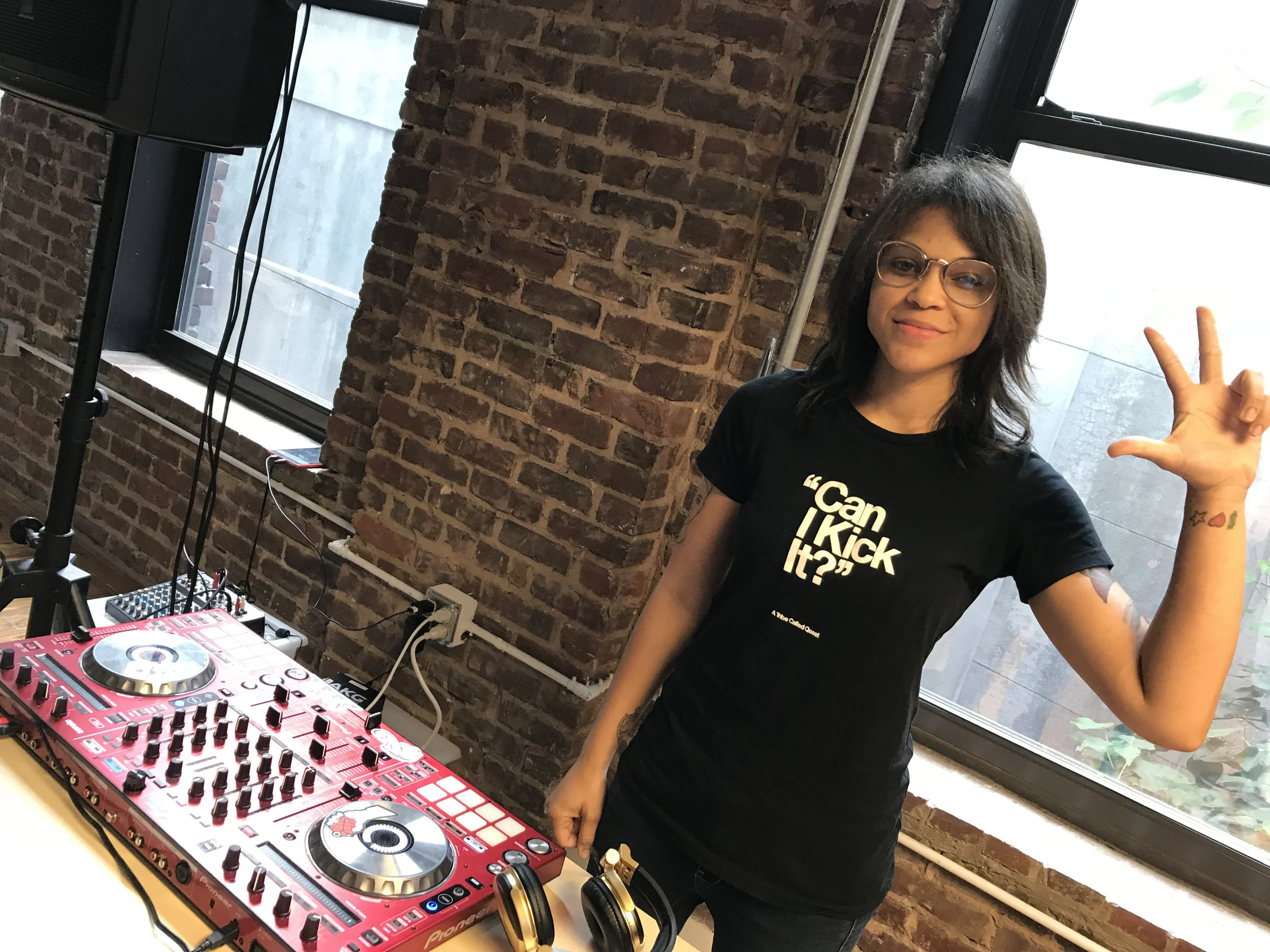
This morning I want to explore this idea of civic love with you. What does it mean to love like a citizen? To love your country. To love your neighbor. To love your enemies. I want to probe beneath these three ideas – clichés, really – to ask what choices we make or avoid when we practice civic love. What does it cost to love – to choose to love even when you don’t have time for it or when no one really cares whether you do or don’t?
1. Love of country.
Thirty years ago, when I was 19, my father drove me to LaGuardia Airport and he put me on a Delta Shuttle to National Airport in Washington. From there I boarded a bus that took me an hour and a half to Quantico, Virginia. The moment I got off that bus that night, large muscle-bound men began screaming at me and the other passengers, pushing us around and making us dump our bags to get in line and get our heads shaved. So began my embarkation into Marine Corps Officer Candidates School.
I spent six weeks that summer at OCS in what was called Platoon Leaders Class
(Junior) and I went back the next summer for six more weeks of PLC (Senior). Those twelve weeks shaped me profoundly. I learned so much – about the history and culture of the Marine Corps, of course, but also about what it felt like to be part of something greater than oneself, connected to a line of service that goes back to the creation of the nation. The red and the gold, the anchor and the globe, the cadence calls, the tales of uncommon valor, the brutally honest leadership coaching we’d get from peers and instructors alike, the physical and mental hardships that I endured with a group of other students from South and North, rural towns and inner cities, rich and poor families.
I was the only Asian American in my company, the only Ivy Leaguer, one of two with glasses, and definitely the smallest. In that swamp crucible, I did more than survive. My unit the second summer, Fox Company, Second Platoon, began with 43 candidates and after attrition ended with 25. I ranked eighth. And when I graduated from OCS in August 1989 and marched with the battalion across the parade deck, snapping EYES RIGHT at the brass in the reviewing stand with my immigrant parents in the bleachers, listening to the band play the Marine Corps Hymn, I thought what a miracle this country is.
Later that year, when I was back at college, I chose to decline the second lieutenant’s commission I had earned. I chose instead to serve in government, where I came to work with leaders like Georgia’s Senator Sam Nunn on foreign policy and later with his daughter and my friend Michelle Nunn on volunteerism and national service. I’ve never regretted my choice. But I often marvel at how much my sense of patriotism was shaped by the Marines – and how little of it is about the military or warfighting and how much of it is about core ethics and values. About a set of ideals.
To love this country is to love its ideals. And to love its ideals is not to shout about them, to have a parade about them, to wave or hug the flag. To love the ideals of this country is to force the country, in the company of others, to live up to those ideals.
This week many citizens are swarming to LaGuardia Airport, not to send their sons and daughters off to OCS like my father did in 1988 but to show support to the terrified undocumented parents and toddlers who’ve been separated and dispersed to various holding facilities across the nation. These citizens are swarming to airports and detention centers, just as they did after the first Muslim travel ban, to make what John Lewis calls “good trouble”: to warn the government of the United States and of the several states that we the people, using the freedom of the press and freedom of assembly and freedom of speech, will keep defending the disfavored.
The body politic has an immune system. People of conscience are the antibodies. And we will keep swarming the virus of hate that is loose in the land and we will contain it.
All these years later, I don’t remember how to take apart an M-16A2 rifle. I don’t recall the ins and outs of small-unit infantry tactics. But my idea of what it means to be a citizen was formed by that list of leadership principles for Marine officers that I learned in 1988. I took that list seriously. I internalized it and retain it to this day.
So when I observe people today, whether it’s a high school student in our Youth Power Program who emigrated from Guatemala last year and is still learning English, or whether it’s the president of the United States, who is also still learning English, or his chief of staff or secretary of defense, both former Marine generals, I judge them by their bearing, yes, but more by their bent for justice, which means not justice for the strong but justice for the weak. I judge them by their moral courage, which the Marines taught me is harder to sustain than physical courage, especially when the crowd encourages cowardice. By their unselfishness, which is not only about letting the men and women in your charge eat before you eat but is also about leading in a way that does not increase their fear of scarcity and their every-man-for-himself scapegoating of outsiders.
To love this country, in short, is to lead and to live with a sense of humanity, humility, responsibility, and decency that is in short supply in national politics and utterly absent in this administration’s execution of the laws. A nation must have borders and be able to regulate them. There must be consequences for those who evade those borders and the law of entry. And nothing in those two statements permits, much less requires, the intentional tearing apart of families and the intentional traumatization of children calculated to gain negotiating leverage or to please the base or trig the libs or whatever.
We’ve heard often in the last week the earnest claim, “This is not who we are.” I beg to differ. Our history – from the Thomas Frazer and Company Slave Auction House that once stood on the site of the Five Points MARTA station a block from here to the expulsion of the Cherokee from Georgia to the abusive assimilation practiced at Indian boarding schools to the Fugitive Slave Act to the incarceration of Japanese American citizens after Pearl Harbor – our history shakes its head and replies, “This is exactly who we are.” The more plausible claim, then, is that this is not who are called to be.
We are called to be bigger. We are called by the creed we profess to believe. The creed of the Declaration and the Preamble of the Constitution and the 14th Amendment and young King’s Letter from Birmingham Jail and Reagan’s speech at the Berlin Wall and Susan B. Anthony’s speech at her trial for the crime of attempted voting. That creed is not blind reverence for law, for evil is often legal. The creed is liberty and justice for all.
We are called to renounce any religious institution, as Frederick Douglass did, that contorts itself to rationalize hatred and weaponize bigotry. And the same is true of our American civic religion. Any movement or party that contorts itself to become an authoritarian cult of personality, is one that true patriots must challenge and reclaim. We are called to do this – to live up to this creed – not just as faithful citizens of the United States, for those of us lucky enough to have that status, but as citizens of our towns.
2. Love your neighbor.
That is the injunction of Scripture and it is a decent starting point for any notion of civic love. We can convince ourselves we believe it. Then we take note of life in the city and we face ourselves more candidly.
Last week I was in Kansas City, Missouri and I saw a man die. I was on the 15th floor of the Holiday Inn Aladdin Hotel. It was Thursday around 3:30 PM. I was working on my laptop – actually, I was writing a tweet about Romans 13, the part of the Bible that Jeff Sessions and Sarah Sanders cited as authority for their policy of separating migrant families, which, it turns out, is the part of the Bible that slavery advocates cited as authority for the Fugitive Slave Act. Getting that tweet phrased just right seemed so important in that moment. Then I heard a sound outside like a gunshot. It was midafternoon in the heart of downtown. Must’ve been construction in the big plaza across the street by the convention center. I kept on crafting my tweet. Twenty seconds later, BANG BANG BANG BANG. There was no mistaking the noise now. I ran across the room to the window overlooking that plaza and saw four cops in tactical formation, handguns drawn, approaching a person who was on the ground and on his back.
The plaza is a wide open concrete space divided like a grid by small shade trees every twenty feet or so, and near some of the trees are little tables and chairs. The man who had been shot was partially in the shade of one of those trees. His face was obscured but his right arm was not and I will confess to you that in that instant of realizing what I was witnessing one of my first thoughts was to see whether that arm was white or black and then immediately after that, a flash of something like relief, ashamed relief, that it was not black. This is where we are today. The policemen approached him cautiously, then nudged him with their feet, at which point his arm began to move, as if he were weakly reaching for something. Or waving something away.
I walked back to the desk to get my phone, unsure of what I was present for but sensing I should document it, and by the time I came back to the window a few seconds later the man was receiving CPR. A few minutes later he was dead. So many emotions washed over me. Shock. Sadness, profound sadness that this person had lost his life looking up at scraggly branches and a hazy sky in 96-degree heat as men with guns and armor stood over him and strangers behind the curtains of hotel windows watched. A feeling of impropriety, even impiety, a sense that I should not have seen that – that someone this man knew should have witnessed his body’s last movement and the passing of his soul.
I say all this without knowing who this man was except, as a police officer later told me when they were taking down the crime scene tape, that he was a “bad guy.” There were in fact two men, as the local TV news would soon report, who’d gotten into a loud fight about a stolen golf cart. One had a gun and was pistol-whipping the other. An observer called the police. The police say that when they arrived on the scene the one with the gun fired at them. That was the first bang. The cops fired back. The next four bangs. And in that blaze they killed not just the man with the gun but the other man too. I never even saw the other man, who was entirely obscured by the tree, and didn’t realize there was a second body until two separate tarps were laid on the ground.
What was the fight about? Were they both, as the cop said, bad guys? Or only one of them? Did they both have to die? Who knew them? Who mourns them? These are the kinds of issues that local news did not probe on Twitter or TV or in the Kansas City Star. It was just another day in America. In fact, that was the second police-involved killing of the day in KC: that morning a woman wielding a sword in a residential neighborhood had been shot by police. A few days later both stories were swept from the headlines by an inmate who escaped transfer and killed two sheriff’s deputies.
The next morning, I saw something nearly as chilling as the death of a stranger. I pushed aside the thin curtain and looked down into the plaza and where that unnamed man had bled and breathed his last, there was now just an irregular patch of sand on the gray surface of this plaza. Right by that patch of sand, under that same shade tree and in one of those dinky little chairs sat a man in a dress shirt and khakis sipping his morning joe and looking at his phone. He had no idea what had happened there less than a day before. No one did. The plaza was its near-empty prosaic self.
This story is not just about how we’ve normalized the epidemic levels of gun violence in our country. It is about the overall coarseness of civic life. We take that for granted in America now, the same way we accept strip malls and billboards everywhere selling us crap. This state of degradation long precedes Trump, though it also begat Trump.
After fifteen years of war fought by a subcontracted one percent of us, after forty years of concentration of wealth into the hands of a very different one percent, after the thinning out of Elks and Rotary Clubs, after twenty years of reality TV and cage fighting, after ten years of social media narcissism, while despair and addiction have shortened the average American lifespan and white lifespans in particular, what we have is a civic culture in which we don’t know our neighbors except as they might irritate us and we don’t know ourselves except as Facebook friends might validate us. We don’t serve together. We don’t play together. We don’t sing together. We don’t fix things together.
To love your neighbors doesn’t require that you like them. It does require that you know them. Gentrification makes that harder. Politics makes that harder. Busyness makes that harder. Which is why we who have gathered here and decided to show up on a Saturday morning – we have to be the ones to make a habit of neighborly love.
Neighborly love is well below MLK’s exalted ideal of agape, the Greek word he favored describing selfless all-inclusive love. Neighborly love has some of what Ben Franklin would have promoted, a reciprocal spirit of mutual interest. It also has some of what the social scientist Marc Granovetter called two centuries later “the strength of weak ties” – bonds of trust and affection strong enough to make you care about common concerns but not so strong that they become blindly tribal. It is an agreement to see each other: to recognize and be recognized, to not let another human fall into the anonymity of a message board or the grim grid of that concrete plaza in Kansas City. Do you see your neighbor? And I don’t mean just the person next door. I mean the homeless man on the sidewalk. The immigrant woman cleaning your bathroom or preparing your lunch.
There’s a new documentary out about Mister Rogers called Won’t You Be My Neighbor? For those of you who have no idea what I’m talking about, I was going to say Google it later but I have a better idea. Ask the person next to you later. Those of you who do remember the PBS children’s show, and Fred Rogers’ soothing and subtly radical message that you are loved and capable of loving, will recall that when white Americans did not want black Americans to put their black bodies in the blue waters of public swimming pools, Mister Rogers and Officer Clemmons, the black police officer character, took their shoes off and sat in lawn chairs with their feet in a wading pool, and spoke as friends. And a generation watched and learned.
To love your neighbor is to see them. To humanize them. To share the gift of believing in their dignity. To rescue them from the noisy loneliness that plagues American life. To save them from the social death that often leads to actual death. This may seem a long way from the troubles of our democratic institutions in Washington and the assaults of today’s angry populists against the rule of law. But it’s not a long way. It is right there. You get neo-Nazi and white supremacist rallies – and you get masked antifa activists – when nobody knows your name or nobody loves their neighbors. You fall into the habit of justifying evil when evil is the nearest path to belonging.
3. Love your enemies.
Recently I was at a very interesting two-day meeting with many homeless conservatives. I don’t mean they are without physical shelter. I mean they have been left without a party now that their party has become a cult of Trump.
One of them was the columnist Mona Charen, who had the guts at CPAC, the annual conservative conference, to call out the hypocrites there who had defended Roy Moore and embraced French neo-Nazi Marine Le Pen. She was booed forcefully, threatened, and needed a security escort to leave the building. Another was David French, a writer for the conservative magazine National Review, a devout Calvinist who grew up in small-town Tennessee and still lives there, who served in Iraq as an Army JAG, and who has had friends and neighbors literally turn their backs on him at church and social gatherings because he has had the temerity to warn that Trumpism is at odds with true conservativism. A third was Sarah Longwell of the Log Cabin Republicans, who knew she was conservative long before she knew she was gay and who has fiercely argued that an embrace of liberty should mean an embrace of her and her wife. And she has watched one GOP operative after another capitulate to bigotry.
What struck me most about these folks was their courage. They have paid a price for their stance. They have been ostracized socially and professionally and are reviled by many Trumpian true believers who regard them as infidels. They’ve been forced to hang out with the likes of me. Which then made me think: who are their enemies?
There was a time not long ago when I might have been their enemy. I’ve been a Democrat all my life and I generally have progressive views. Mona and I disagree on affirmative action. David and I disagree on the Colorado baker who refuses to make a wedding cake for a gay couple. Sarah and I don’t see eye to eye on tax cuts for the rich.
But we’ve been brought together by a shared concern for the health of the republic and a shared commitment to defending democracy against rising authoritarianism and tribalism and polarization. We’ve been brought together by a crisis. And because we are at the same table now with some common purpose we have humanized each other. Mona and David have kids about the age of my daughter and stepdaughter. Sarah has a fighting spirit, a solid core, a get-it-done attitude and I just want to be more like her. David’s wife has written books with Sarah Palin, which you literally could not pay me enough to do, yet we discovered we have a dear friend and colleague in common.
I can tell you that if the United States ever gets to a saner politics, where it’s just about arguing over our philosophies and recognizing that democracy is a meant to be a game of infinite repeat play, not a finite scorched-earth contest – if we get to that saner place, where I’ll be debating with David and Sarah and Mona and others like them, winning some and losing some, I can tell you these people will not be my enemies. Not because I love everything about them or everything about their beliefs. But because I found something about them and something about their beliefs to love.
Most of us don’t get a chance to engage like this. Think about the countless missed connections in our lives as citizens, missed chances to make friends out of enemies. Let me close now with a tale of two drivers.
The week before last I was in Wichita, with the folks at the Kansas Health Foundation and the Kansas Leadership Center. The man who gave me a ride to the airport was about 65 years old. White, Kansas native, Air Force veteran, used to have a good job in aircraft maintenance. When he learned that I ran an organization called Citizen University, he could not wait to share his views about how “illegals” had taken away jobs at the factories. He told me about a woman he knows who is here illegally and had gotten free tuition to get certified in phlebotomy, the field he had once hoped to enter. He said he’d told her she should get U.S. citizenship. When I explained that there is no way for her just to “get” citizenship, he was unmoved. I said Congress needs to create a pathway to citizenship for the 11 million undocumented people because, among other reasons, we could not possibly deport them all at once. He replied, “Not all at once.”
Then on my way to the airport yesterday, I met his opposite number. A woman who grew up in the Seattle exurbs, got herself emancipated at sixteen so she could live on her own in the city, was a voter and a left-wing activist from the get-go, marching against Vietnam, against Reagan’s embrace of the religious right, against the Iraq War, and now against the people who put immigrants in concentration camps and who, as she put it, hate dykes like her. She is an artist and photographer and she and her partner dream of retiring to the Oregon Coast. But she is over 60 and is barely breaking even as a Lyft driver. After a long career in telecom, she encountered the silent ageism of the tech workplace. She took English and math courses to get her AA but says that unless her degree can take her back in time forty years, it’s not going to help her. So, after years of applying for jobs and not getting interviews, for her final English 106 assignment she wrote a break-up letter to corporate America. She posted it to her LinkedIn page. A big FU to the big businesses she says have screwed Seattle.
These two Americans have never met and likely never will. But they think they know each other. They have pictures in their minds of each other: the coiled racist who wants to build a wall and take us back to the 50s; the pierced-nose socialist who cares about everyone but Americans. Their minds are set to Enemymode and Enemymode makes two-dimensional characters out of three-dimensional humans. Enemymode is flattening and blinding and all-consuming. Like a good video game, it trains you to focus and filter out complication and just keep score. I am naturally good at Enemymode. You are too.
But if I could bring these two American enemies to the same town and introduce them, they would discover they are living the same story. They would recognize the sadness, the disappointment, in each other’s stories, as well as the determination and resilience. They would see that they face a common adversary of free market fundamentalism and of globalized capital that’s free to exploit local labor. They would discover they both have been treated as outsiders in their own land. They would see that they don’t have to pass down that pain to other outsiders, that they can help each other and not fall for demagogues of either the right or the left. They would realize they are not alone. They would discover civic power – and the possibility of civic love.
Here’s the thing: I can bring these two Americans together. So can you. We are surrounded by them. We are them. We just need to make the time to listen to their stories – and each of us to our own conscience. We cannot be too busy to love in Atlanta or America. In fact, we’ve got to be in a hurry to love. There are migrant babies in cages screaming for their mothers. Be in a hurry to love. There are angry white men blaming nearby immigrants for the sins of faraway capitalists. Search for something in them to love. Be in a hurry to love. There are inflamed liberals who cannot or will not distinguish between a conservative and a Nazi. Love them still. Be in a hurry to love.
Flannery O’Connor, daughter of Georgia and great storyteller of the South, warned us to resist tidy redemptive narratives. I offer no promise of redemption. Our country’s soul is on fire the way this city was at the end of the Civil War, and what will douse the flames is not more hating but more loving. That is our only hope. To love like citizens: to cherish our creed, our neighbors, our enemies.
Hurry up and love. Our country calls us.
Learn more about Citizen University and attend their next Civic Saturday by liking and following them on Facebook.
Service Spotlight | Pamela Basye
To celebrate National Volunteer Week, we've hand selected some of our most promising fellows in our Civic Leadership Program to shine a spotlight on. Our civic fellows manage service projects at designated non-profit partner sites by recruiting volunteers, overseeing service days and providing education to volunteers as to the mission of their partner agency.
“It is my dream that the undesirable population feel that they are important and loved.”
To celebrate National Volunteer Week, we've hand selected some of our most promising fellows in our Civic Leadership Program to shine a spotlight on. Our civic fellows manage service projects at designated non-profit partner sites by recruiting volunteers, overseeing service days and providing education to volunteers as to the mission of their partner agency.
Today we recognize Pamela Basye for her outstanding efforts to serve Atlanta. Pamela has been volunteering with Hands On Atlanta for 2 years and when she's not volunteering, she spends her days as a Special Education teacher with UAFA. We caught up with Pamela recently to talk about her work as a volunteer:
Why is volunteering important to you?
It is my dream that the undesirable population feel that they are important and loved.
What are the challenges facing Atlanta you care about most?
Education and hunger are the challenges that appeal the most to me. My mission is to close the achievement gap and decrease hunger in urban communities.
Why did you decide to join the Hands On Atlanta Civic Leadership Program?
I saw this as an honor and opportunity to make a greater impact throughout varies communities in Atlanta.
What has been the biggest surprise about volunteering?
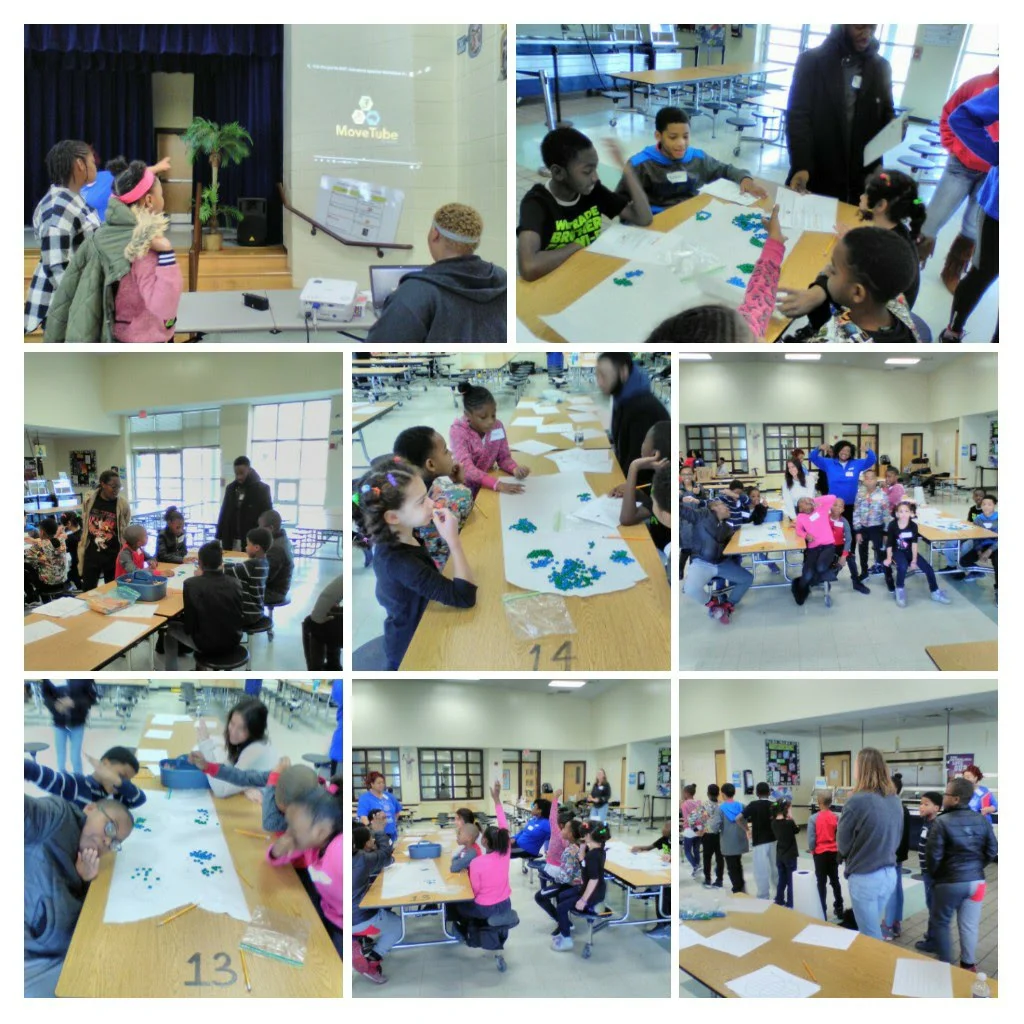
The overwhelming number of volunteers that support Hands On Atlanta projects. On February 10, 2018 over 20 college students from Denmark served the students at the Discovery program at Heritage Elementary session by taking them on a virtual field trip to Denmark.
What advice would you give someone thinking about making volunteering a part of their lifestyle?
I would encourage them to go to the Hands On Atlanta website where there a hundreds of opportunities and invite them to join one of the teams that I participate on.
When you’re not at work or volunteering, how else do you spend your time – hobbies, interests?
I enjoy praise and worship at my church and dancing to my favorite playlist in the swimming pool at the YMCA.
Donate now to support Pamela and her fundraising requirement to the Civic Leadership Program.
Service Spotlight | Donnis Davis
To celebrate National Volunteer Week, we've hand selected some of our most promising fellows in our Civic Leadership Program to shine a spotlight on. Our civic fellows manage service projects at designated non-profit partner sites by recruiting volunteers, overseeing service days and providing education to volunteers as to the mission of their partner agency.
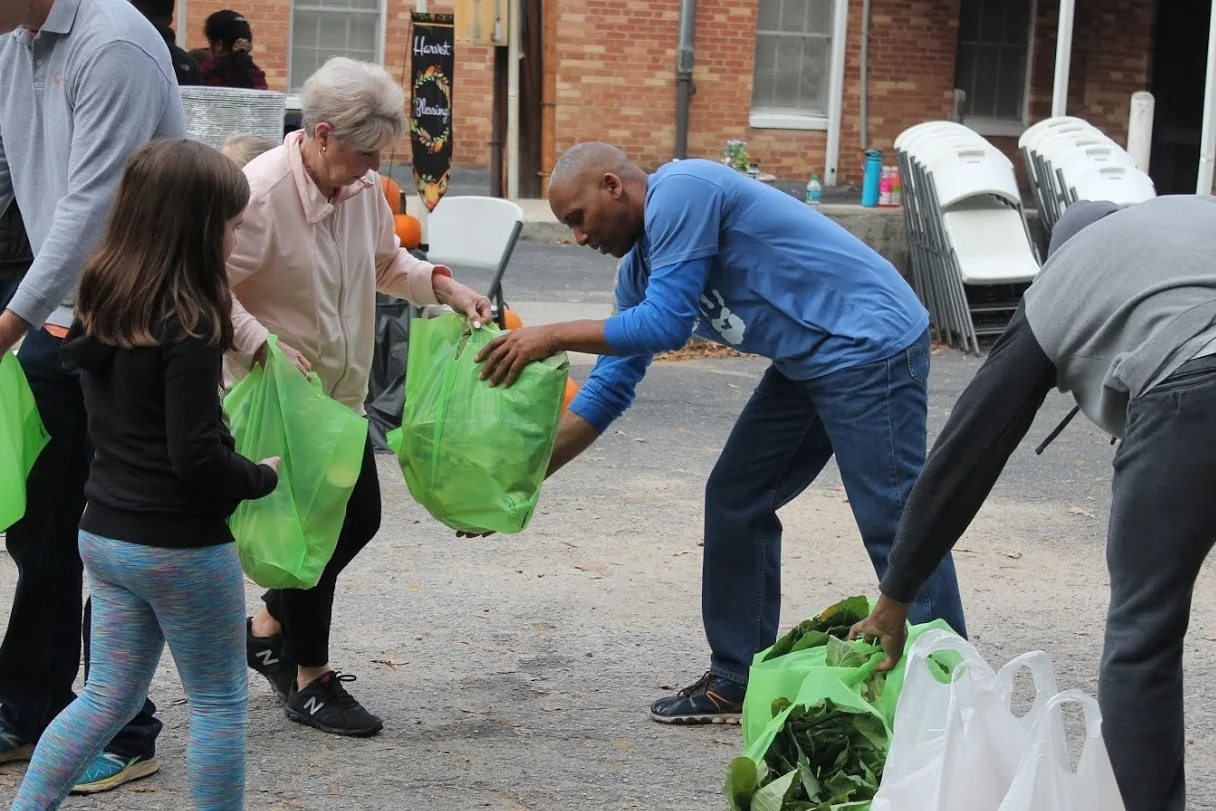
“The appreciation you get from, not only the people you’re helping, but also from the agency personnel you volunteer alongside has been the biggest surprise for me.”
To celebrate National Volunteer Week, we've hand selected some of our most promising fellows in our Civic Leadership Program to shine a spotlight on. Our civic fellows manage service projects at designated non-profit partner sites by recruiting volunteers, overseeing service days and providing education to volunteers as to the mission of their partner agency.
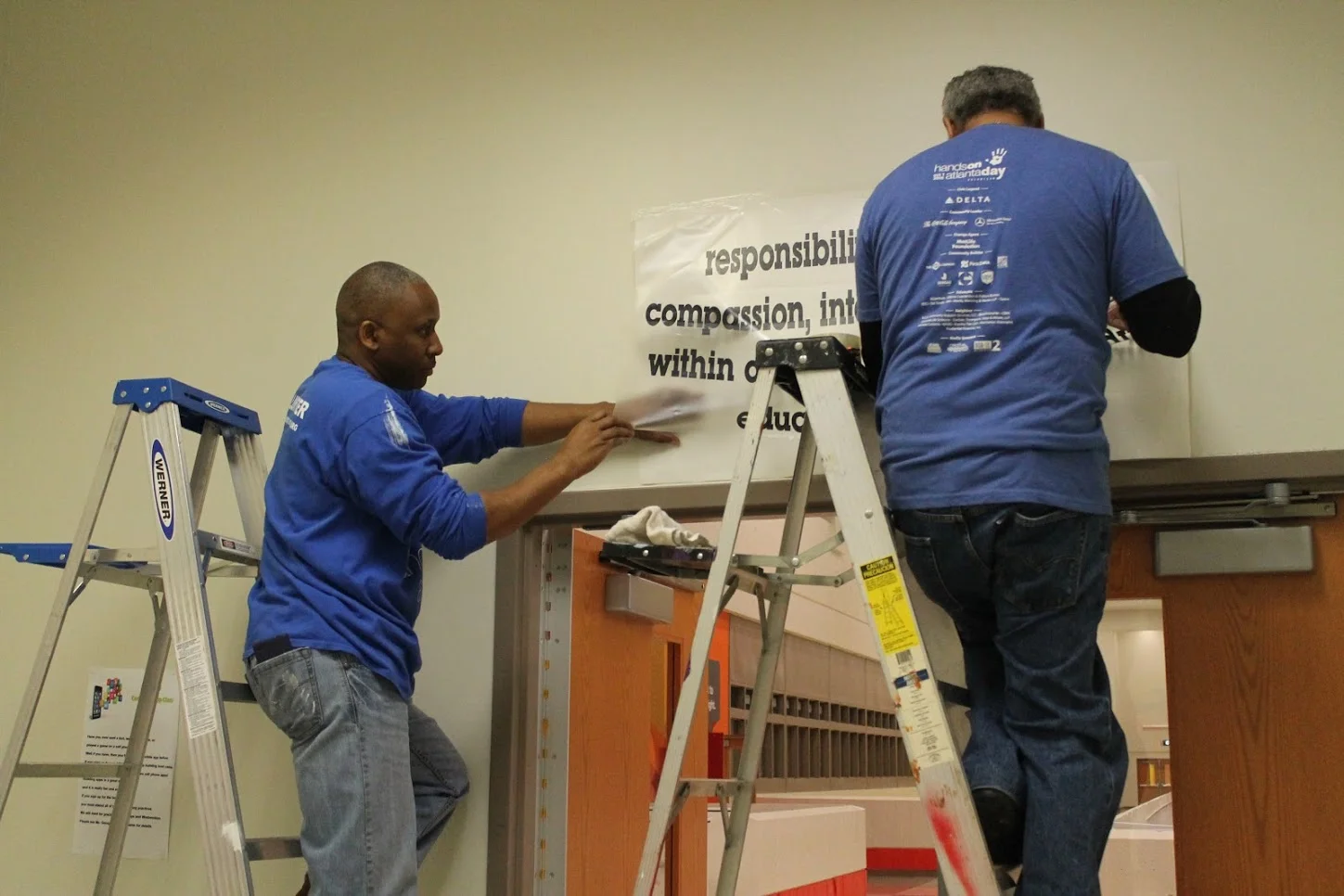
Today we recognize Donnis Davis for his outstanding efforts to serve Atlanta for more than 10 years as a Hands On Atlanta volunteer! We caught up with Donnis recently to talk about his work as a volunteer:
Why is volunteering important to you?
Volunteering gives me an opportunity to directly impact my community in the areas that I care about. It also gives me an opportunity to introduce family and friends to volunteering, while sharing our city's challenges with them.
What are the challenges facing Atlanta you care about most?
I care mostly about youth and "at-risk youth" specifically, as well as hunger and homelessness. I love volunteer with SWEEAC because that’s who I’m having the most impact with right now thru their mission of providing services in four areas of critical need:
Anti-Hunger
Life Skills Enhancement
Children at Risk
Dress for Success
Why did you decide to join the Hands On Atlanta Civic Leadership Program?
I joined because I wanted to obtain the necessary skills to impact my community through ways other than volunteering such as recruiting volunteers, fundraising and networking to meet the right people that may assist you in creating community projects.
What has been the biggest surprise about volunteering?
The appreciation you get from, not only the people you’re helping, but also from the agency personnel you volunteer alongside has been the biggest surprise for me. I was also surprised to learn how the impact my efforts can have on other volunteers as well.
What advice would you give someone thinking about making volunteering a part of their lifestyle?
There are four things every new volunteer or volunteer leader should know:
Be committed and stay committed, because there are people depending on you and your time.
Be patient, because you may not see the results you initially anticipated going in.
Be positive, because not all projects go as planned.
Be grateful because your volunteers could have chosen a different project.
When you’re not at work or volunteering, how else do you spend your time – hobbies, interests?
I enjoy spending time with my family, day excursions with my wife, and Falcons football. I also serve as a mentor at my home town high school during the school year.
Donate now to support Donnis and his fundraising requirement to the Civic Leadership Program.
Service Spotlight | Keona Maye
To celebrate National Volunteer Week, we've hand selected some of our most promising fellows in our Civic Leadership Program to shine a spotlight on. Our civic fellows manage service projects at designated non-profit partner sites by recruiting volunteers, overseeing service days and providing education to volunteers as to the mission of their partner agency.
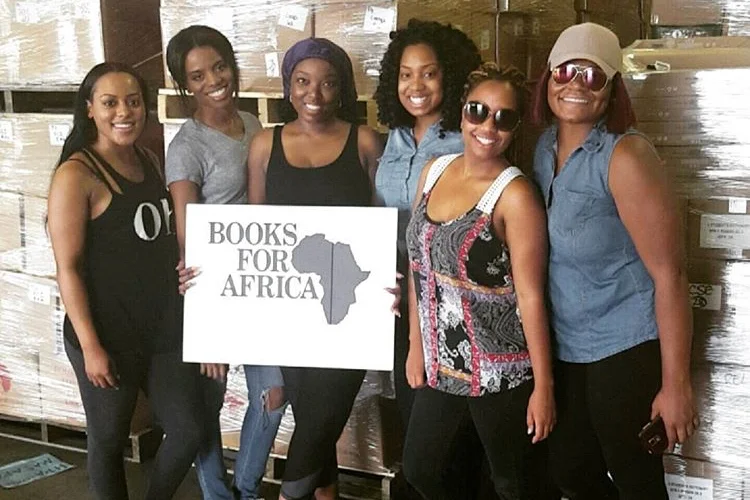
“I love it when volunteers show up early, ask questions about the organization and its mission, and leave smiling and feeling great about themselves. Hopefully it means they’ll come back.”
To celebrate National Volunteer Week, we've hand selected some of our most promising fellows in our Civic Leadership Program to shine a spotlight on. Our civic fellows manage service projects at designated non-profit partner sites by recruiting volunteers, overseeing service days and providing education to volunteers as to the mission of their partner agency.
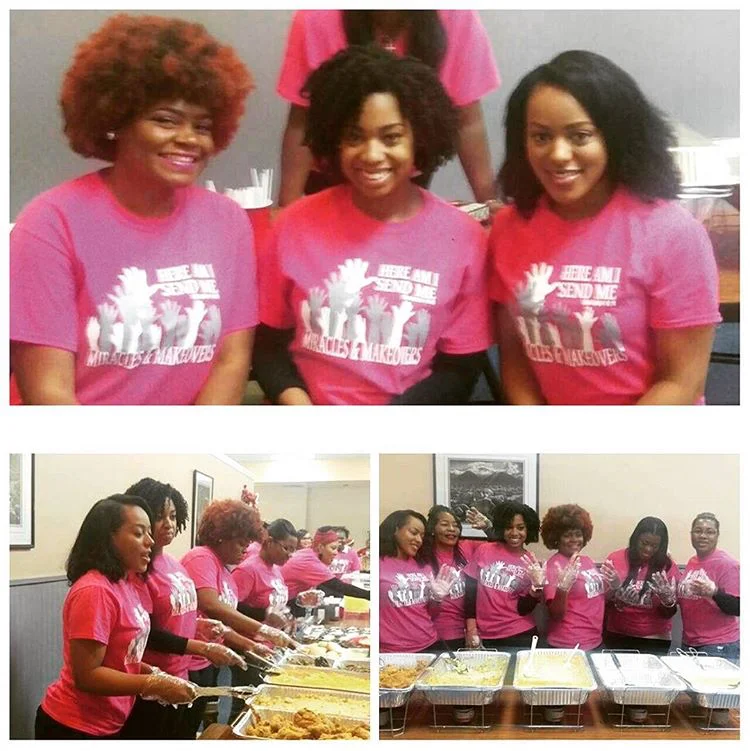
Today we recognize Keona Maye for her outstanding efforts to serve Atlanta. Keona has been volunteering with Hands On Atlanta for 2 years and when she's not volunteering, she spends her days as a Senior Property Manager at Goal Property Services. We caught up with Keona recently to talk about her work as a volunteer:
Why is volunteering important to you?
I believe that our lives are not complete if we live them selfishly. It wasn’t until I began volunteering that I felt the most fulfilled and found purpose. It’s important for me to help others and serve especially because people have helped me. We’re responsible for one another.
What are the challenges facing Atlanta you care about most?
I care strongly about homelessness, which of course, relates to my career field of real estate. Atlanta has been named “One of the Neediest Cities in America” ranking high among cities like Detroit and Memphis due to a growing homeless population. It is my goal to partner with a nonprofit, such as, The Atlanta Children’s Shelter or Our House, that works to combat this issue.
Why did you decide to join the Hands On Atlanta Civic Leadership Program?
I was considering pursuing a Master’s degree in Nonprofit Management when I learned about Hands On Atlanta’s Civic Leadership Program. I opted to interview for the program instead of obtaining another degree because CLP offered training along with real world experience. I was also familiar with Hands On Atlanta and the amazing work that the organization was doing for local communities. I truly wanted to be a part of its impact.
What has been the biggest surprise about volunteering?
The biggest surprise about volunteering has been the people! You meet every day people with every day lives that decided to dedicate their most valuable asset - their time, and are actually excited about it. I love it when volunteers show up early, ask questions about the organization and its mission, and leave smiling and feeling great about themselves. Hopefully it means they’ll come back.
What advice would you give someone thinking about making volunteering a part of their lifestyle?
I would advise that person to find their “why” and a volunteer opportunity that they really enjoy. If they want to be consistent, it’ll be easier to participate when they understand the reason they actually want to volunteer and the difference they’re making. It also helps if they’re having fun and their interests are being met.
When you’re not at work or volunteering, how else do you spend your time – hobbies, interests?
I spend lots of time with family and friends. They keep me pretty busy and it’s important that I foster those relationships despite my professional life. However, I’ve also started a vacant home cleaning business that is beginning to grow and thrive and definitely takes up more of my time.
Donate now to support Keona and her fundraising requirement to the Civic Leadership Program.